Design Manifestos
for the End of Capitalism
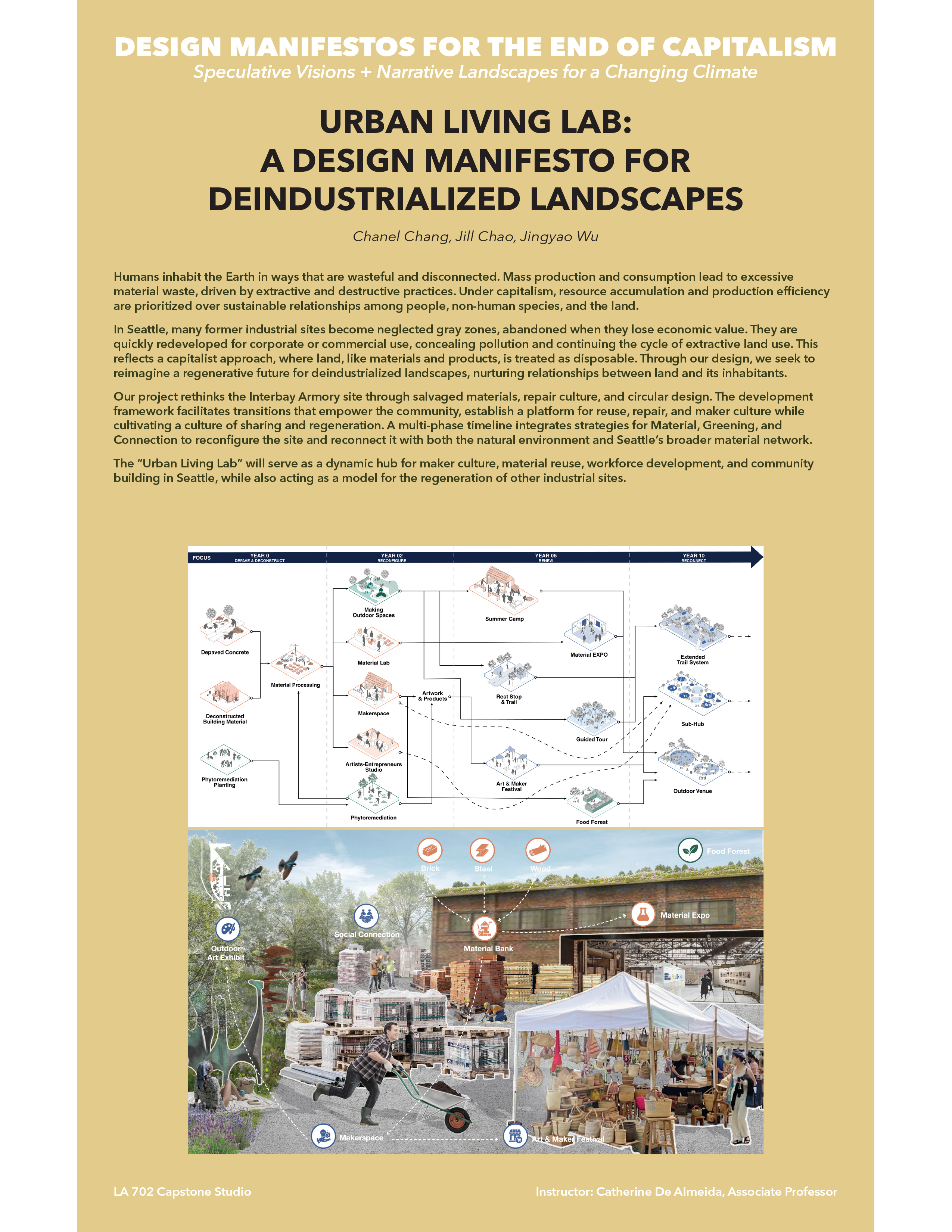
︎︎︎Urban Living Lab: A Design Manifesto
For Deindustrialized Landscapes /
Chanel Chang, Jill Chao, Jingyao Wu
︎︎︎ Food For All, For All Time: A Design Manifesto
For Accessible And Local Food Systems /
Joanna Chen

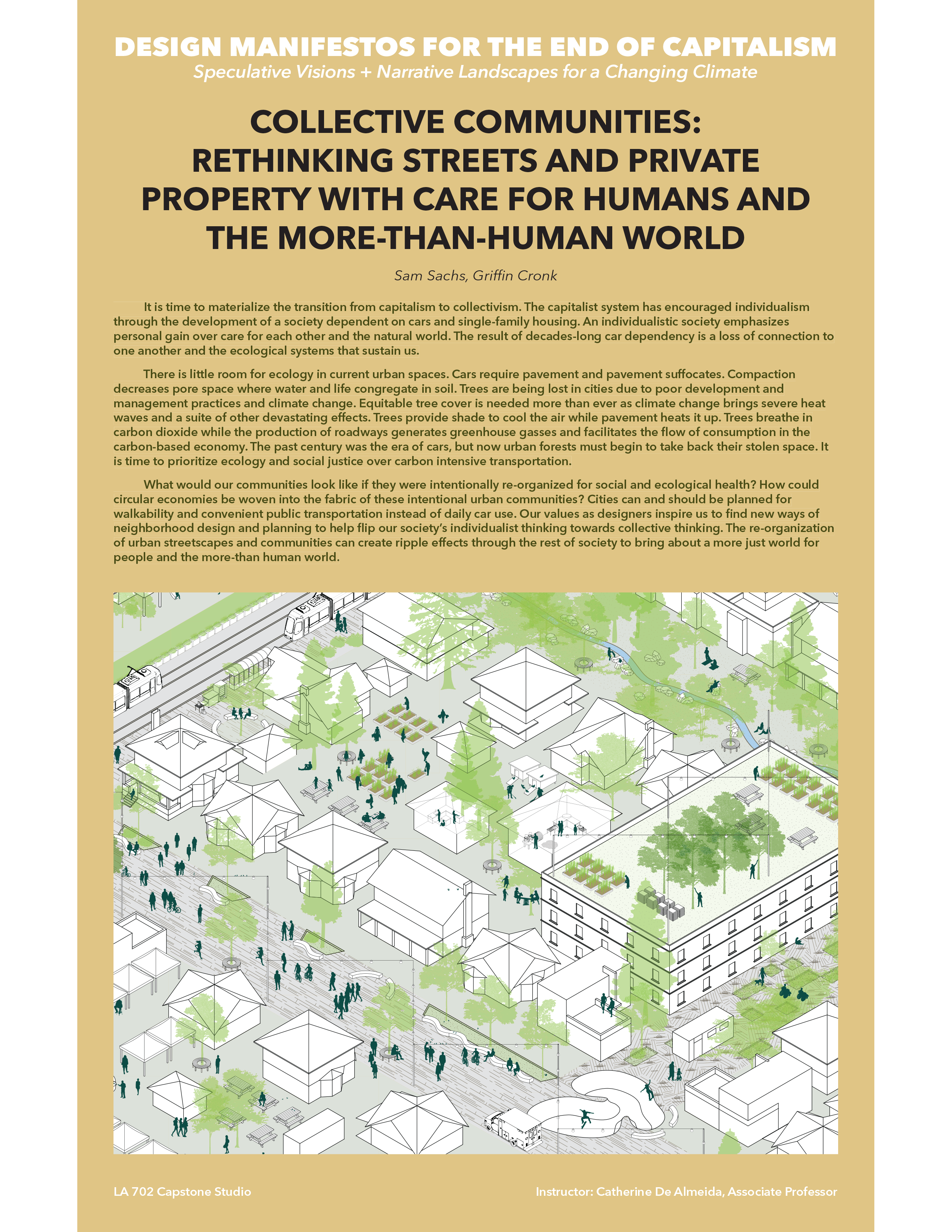
︎︎︎ Collective Communities: A Design Manifesto
For Living Intentionally With Each Other and the
More-Than-Human World /
Sam Sachs and Griffin Cronk
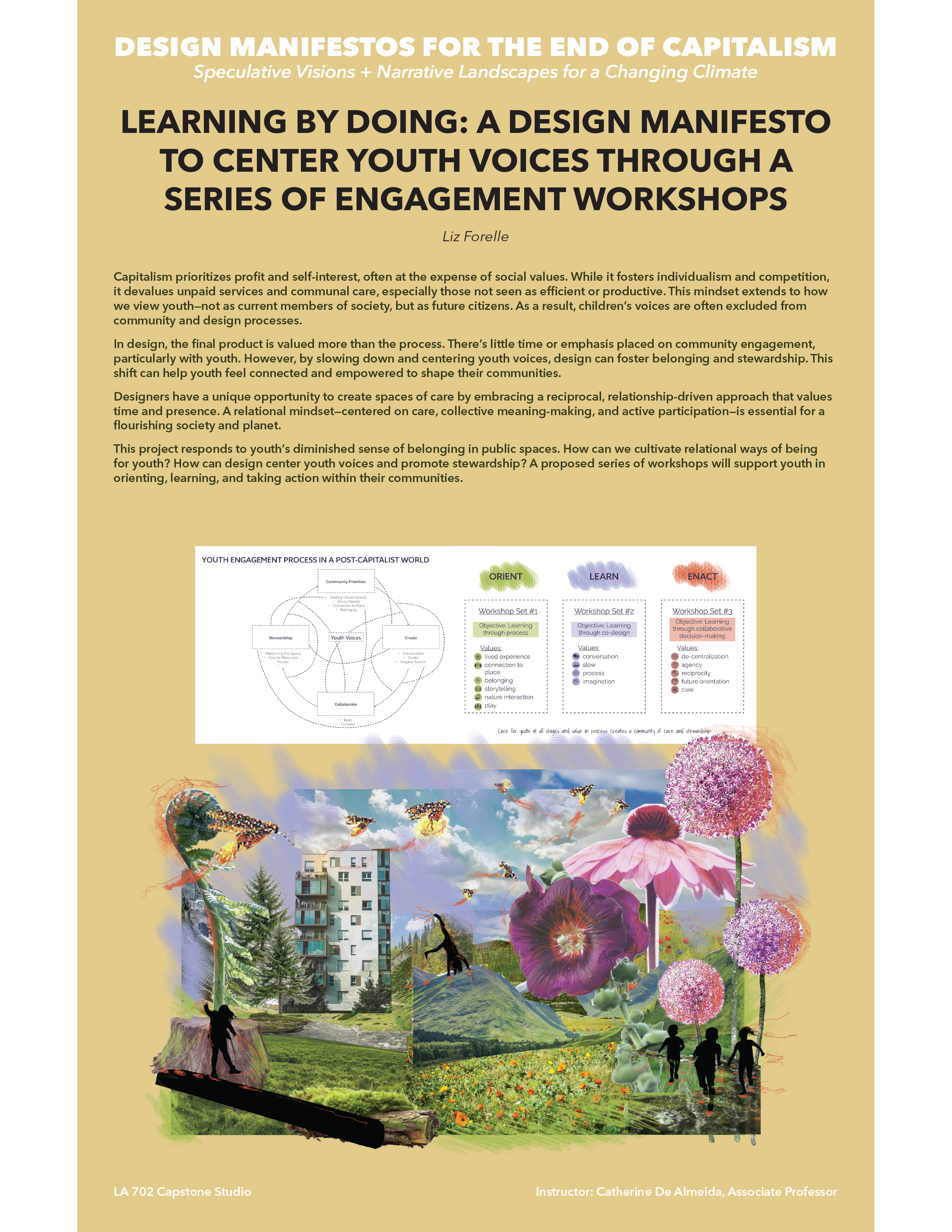
︎︎︎ Learning By Doing: A Design Manifesto To
Center Youth Voices Through a Series
Of Engagement Workshops /
Liz Forelle
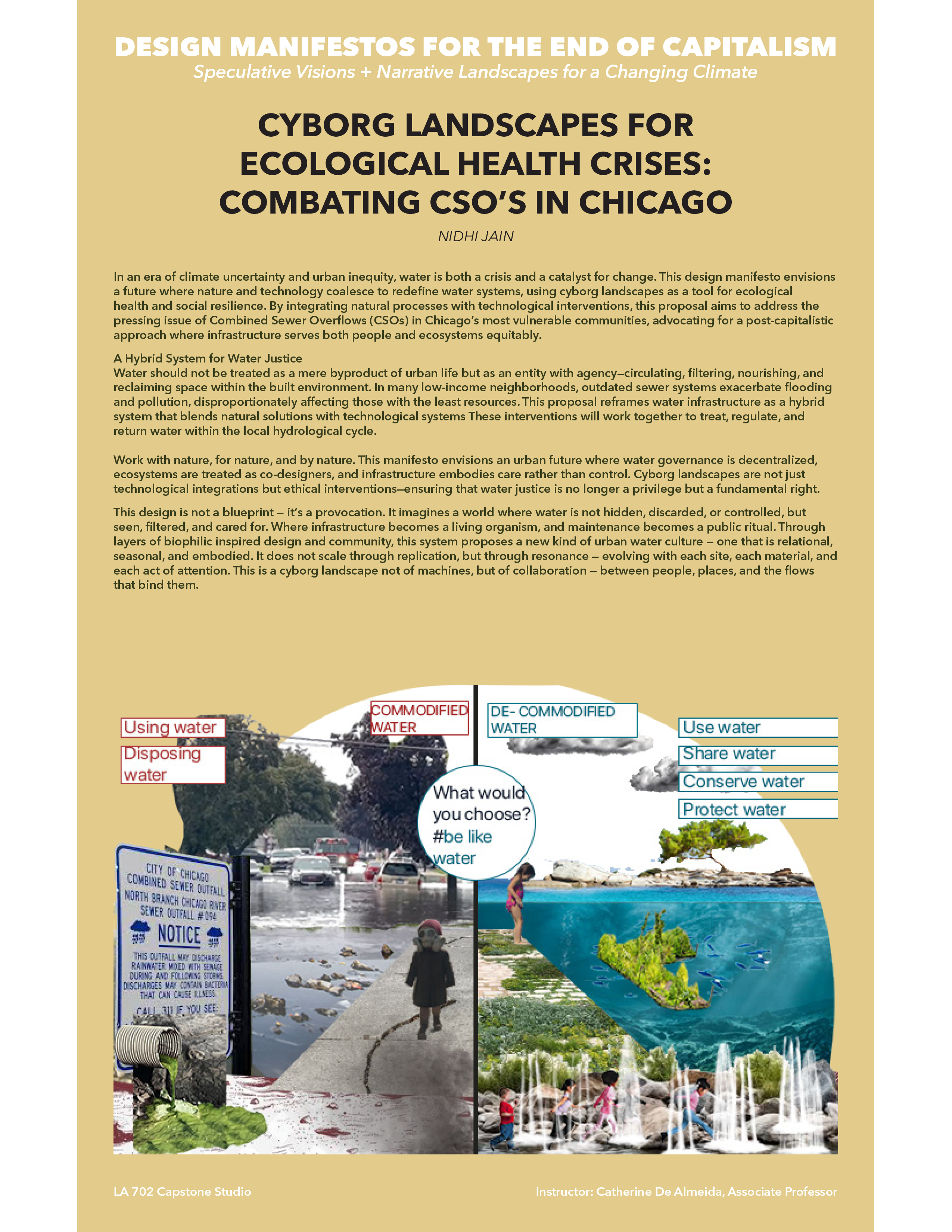
︎︎︎ Cyborg Landscapes For Ecological
Health Crisis: A Design Manifesto For CSO’s in
Chicago’s Vulnerable Communities /
Nidhi Jain
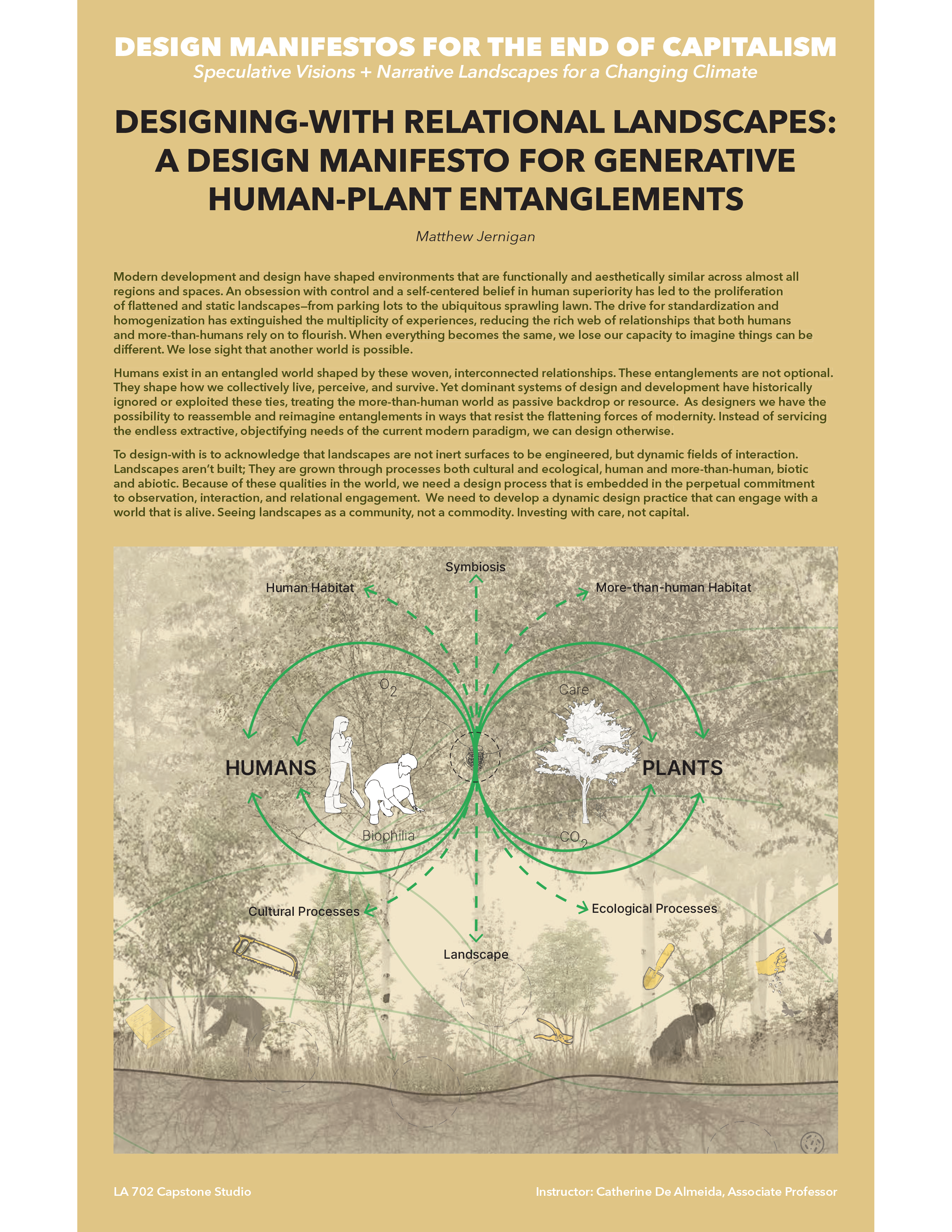
︎︎︎ Designing-With Relational Landscapes:
A Design Manifesto For Generative
Human-Plant Entanglements/
Matthew Jernigan
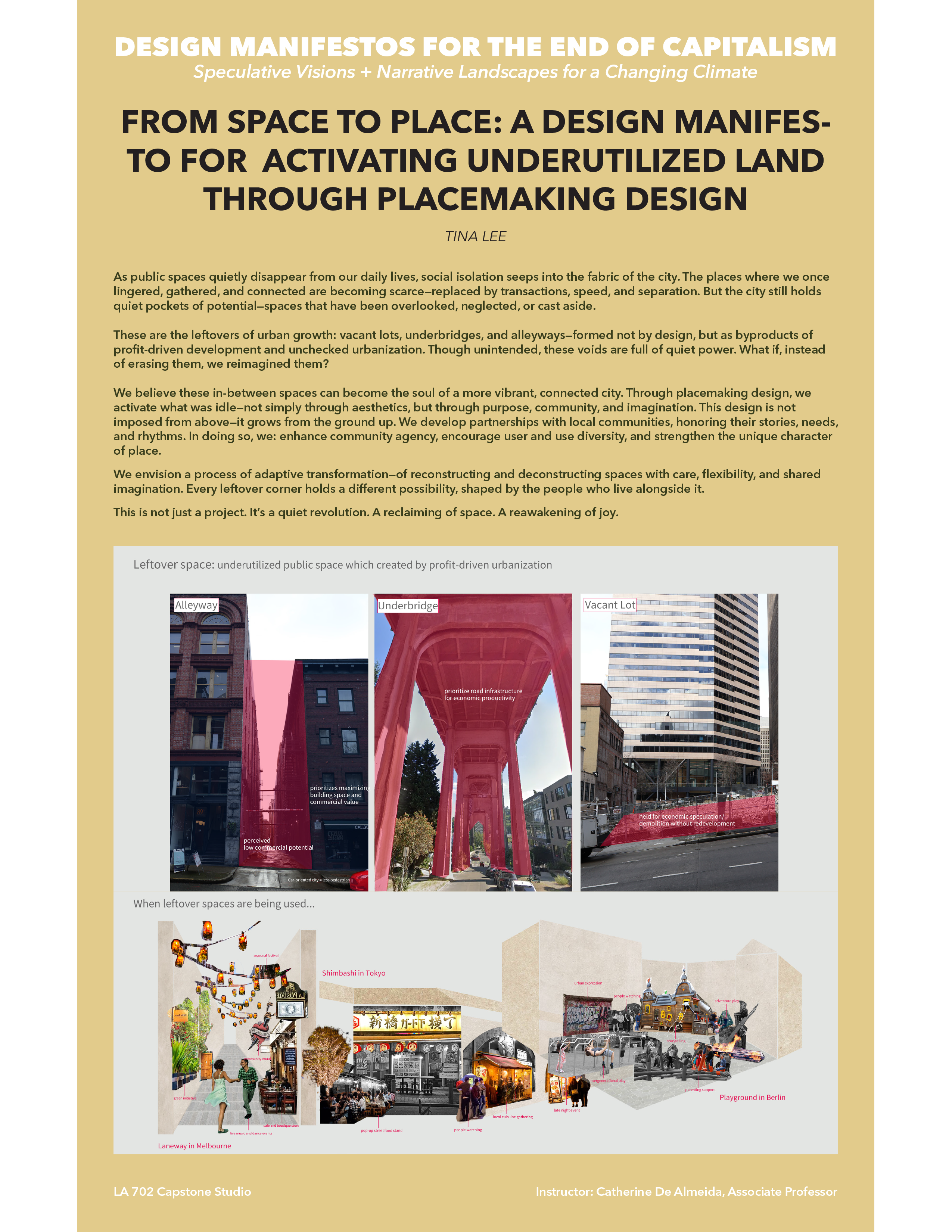
︎︎︎ From Space to Place: A Design Manifesto For
Activating Underutilized Land Through
Placemaking Design /
Tina Lee
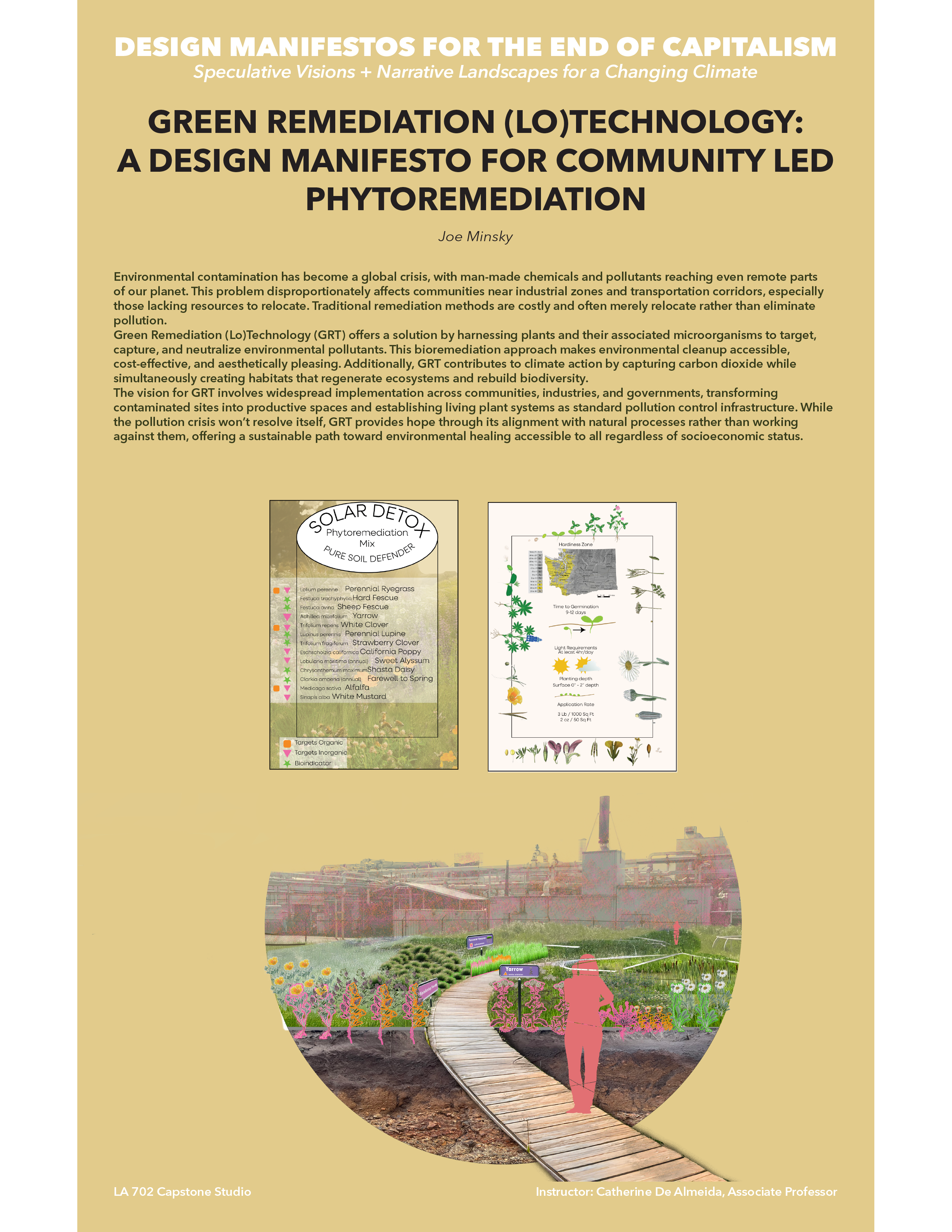
︎︎︎ Green Remediation (Lo)Technology:
A Design Manifesto For a Cleaner Future /
Joe Minsky
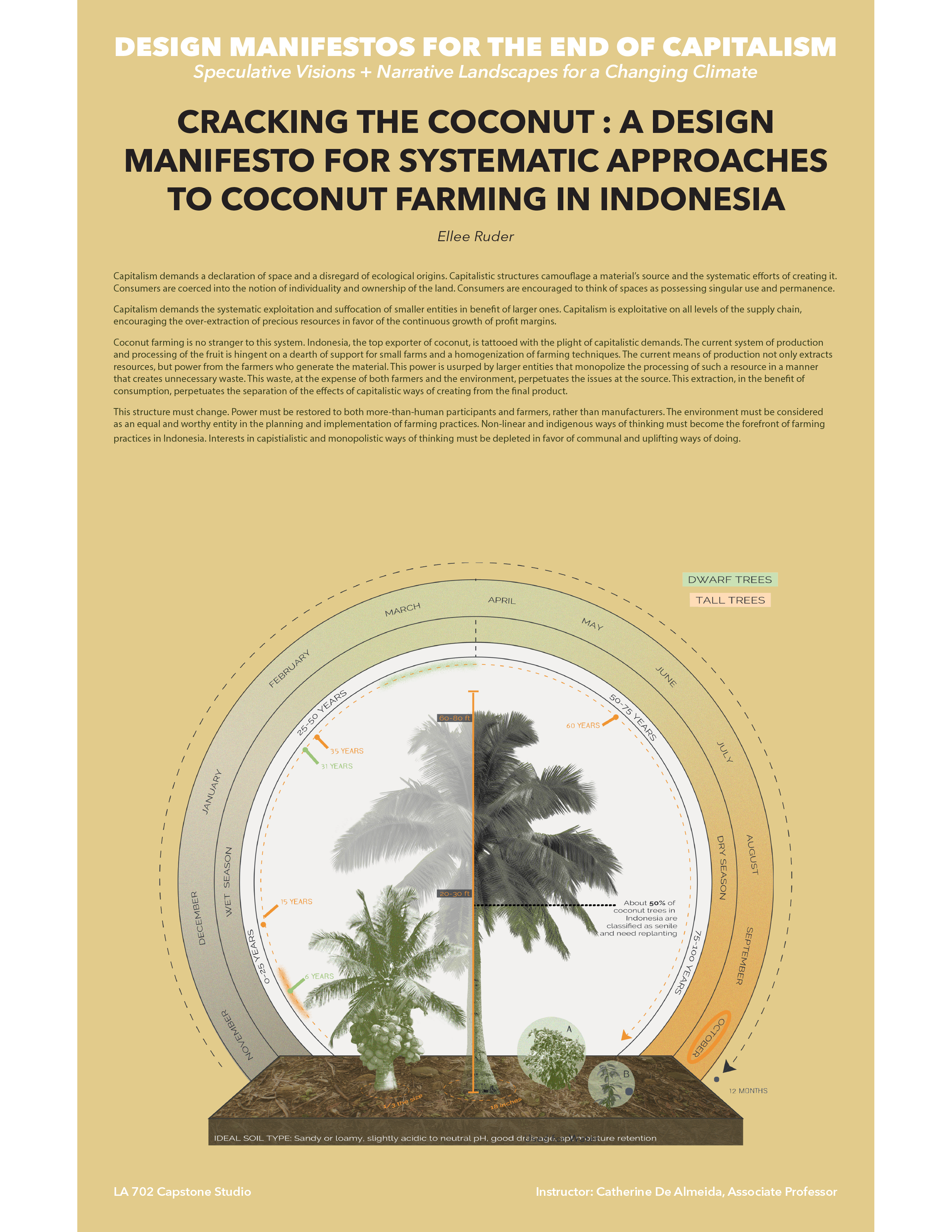
︎︎︎ Cracking the Coconut: A Design Manifesto
For Systematic Approaches to
Coconut Farming in Indonesia /
Ellee Ruder
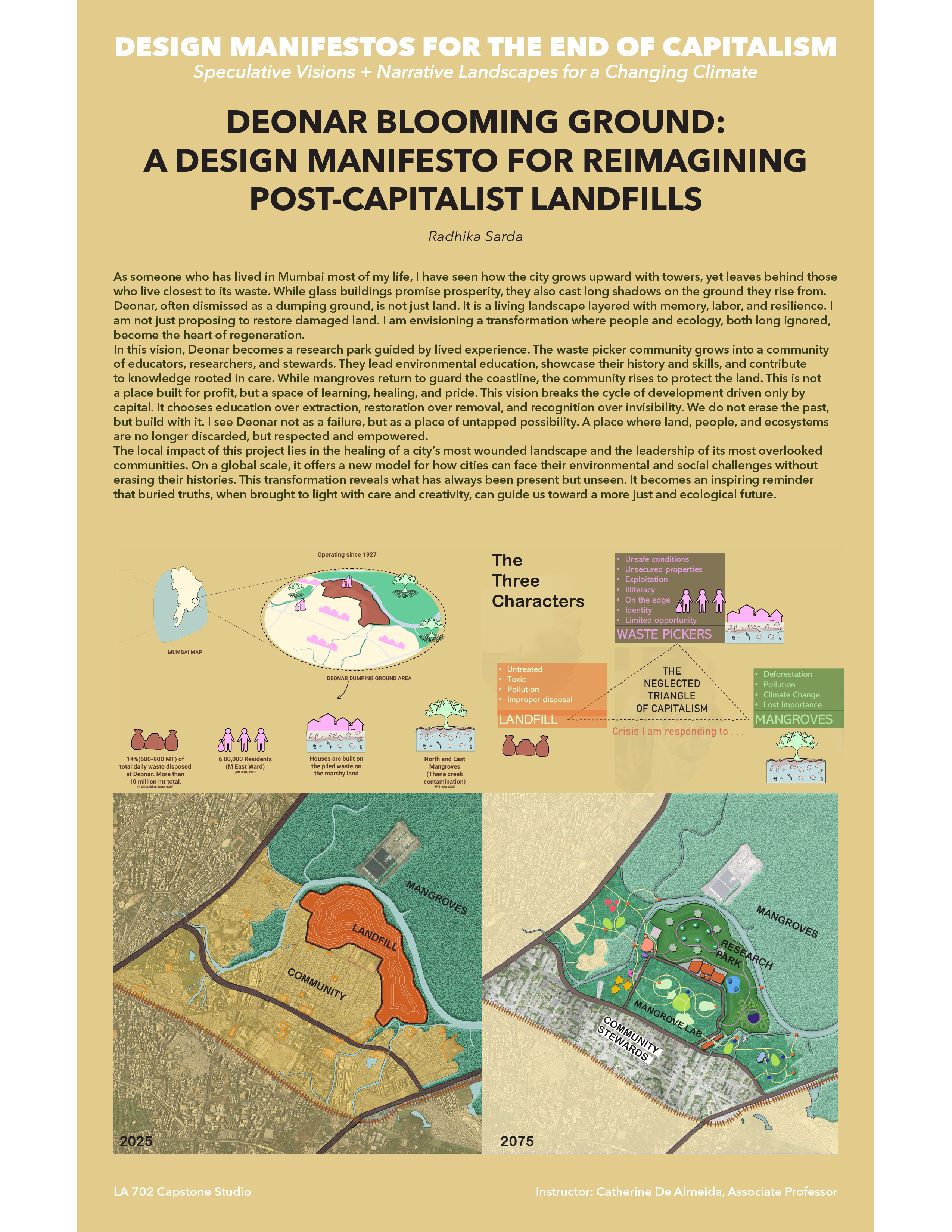
︎︎︎ Deonar Blooming Ground: A Design Manifesto For
Reimagining a Post-Capitalist Landfill /
Radhika Sarda
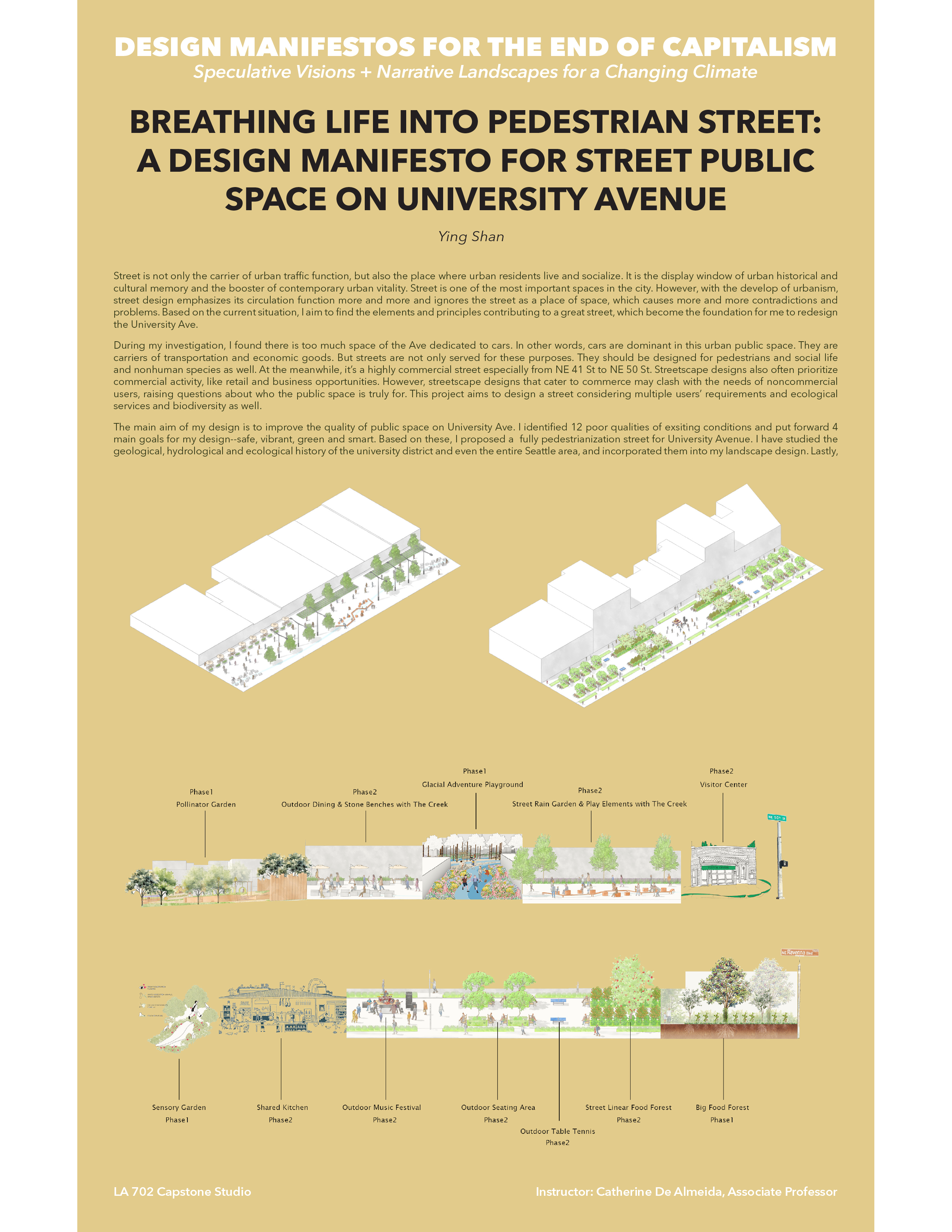
︎︎︎ Breathing Life Into The Pedestrian Street:
A Design Manifesto For Street Public Space
on University Avenue /
Ying Shan
Speculative Visions + Narrative Landscapes for a Changing Climate | Project Phases
p1 : what are you responding to?
You are entering this studio having completed some groundwork on establishing your values, topic,
design research question, case studies, and literature, and you’ve identified potential sites. Building on that
work, Phase 1 is dedicated to setting the groundwork for developing your Speculative Visions + Design
Narrative Landscapes for the End of Capitalism and a Changing Climate.
The purpose of this first phase is for you to answer the question: What are you responding to? Think of this as
your inventory and analysis phase that requires you to document what exists today (or has existed historically
that has led to today). Consider both WHAT you want to document and HOW. Your analysis must highlight how
capitalism plays a role in the system(s), site(s), and communities you are engaging in.
This phase sets the context for your work. This can be site-based information, regional, national, and even global
information. It can be data-based and/or spatial and/ or political and/or socioeconomic and/or ecological. It can
be the documentation of patterns, movement and flows, statistical information that shows change over time, etc.
This can be represented through maps, diagrams, timelines, models, annotated photographs, etc. You get to decide,
but put together a list of products (representational type), what they will communicate, and why it is relevant to your
project. You will have 4 weeks to complete this first Phase.
The main objective of P1 is to graphically / visually / representationally describe your topic’s local and potentially
regional/national/international systems, and the dynamic processes at work within each network at the macro scale.
Another objective of P1 is to define and represent the organizational patterns of macro-scaled systems, and how
they operate at a micro scale, considering multiple time and spatial scales of information. Building on Phase 1, Phase 2
is dedicated to testing and applying your manifesto visions, attitudes, and positions, beginning to answer your design
research question, collecting more case studies and literature (if relevant and/or needed).
p2 : how do you respond?
The purpose of this second phase is for you to answer the questions: How do you respond? What is your vision?
How do you want to intervene in the system(s), condition(s), and site(s) you have identified? Think of this as your concept
development phase that requires you to not only refine your design concept (building on your manifesto), but begin to apply
design as a vehicle for transformative change, working towards a new future you imagine. Consider both WHAT you want
to design and HOW you want to design and represent it. Your concept development must continue to highlight how
capitalism plays a role in the system(s), site(s), and communities you are engaging in, and most importantly, communicating
the alternative you imagine.
This phase is your primary design phase, and we will move from concept development to design development. WHAT you
design is defined by you, and ought to tie to your work from Phase 1. Explore how your interventions are multi-scalar, from
material and site to larger impacts that are regional, national, and even global. They can be data-driven, spatial and
ecological, and can also explore political and/or socioeconomic systems. Consider the design of space(s), process(es), AND
system(s), requiring you to imagine not only a new future, but also the processes required for achieving it.
You will have 4 weeks to complete concept development, 1 week to prepare for and give your presentation, and 3 weeks to ]
refine and further develop your design.
The objective of P2 is to visually articulate your design visions and narrative graphically / visually / representationally, further
expanding and refining your topic. Your design speculations ought to explore how it impacts not only local, but also potentially
regional/ national/international systems, and the dynamic processes at work within each network at the macro scale. Another
objective of P2 is to define and represent your spatial, material, and conceptual interventions, considering the organizational
patterns of macro-scaled systems, and how they operate and change at a micro scale, as well as multiple time and spatial
scales of information.
p3 : what is the result / impact / effect? what are you changing?
In this third phase, students were asked to consider the larger impacts of their projects. This required them to zoom out and
consider how their intervention might change the larger context of where their project is situated.
What is the larger result, impact, and effect of your project? What are you changing, and why?
This required the students to reflect on their work, and whether their project achieves the goals, ethos, and ambitions set
forth in their manifestos.
Another aspect of this phase required students to refine the larger connections and relationships of their projects at a
network / regional scale, and how their visions can be scaled up and phased over time. Students also explored the potential
for how their design ideas might migrate to other sites, growing and shifting larger contexts at a broader scale.
As a larger body of work, students have been encouraged to package their projects and design ideas to articulate how they
are envisioning brighter, bolder futures that show the potential of what lies beyond the horizon of extractive capitalism.
p4 : project synthesis
In the final phase, students had an opportunity to refine their projects based on the feedback provided
by reviewers. Reviewer feedback at this point in the design process presents an opportunity to understand the strengths of the
project in its current state, and potential areas for growth and improvement for further development or refinement.
Reviewers were provided with the following prompts:
What drawings or representational approaches are currently clearly communicating their ideas, and what might be missing?
Are there 1-2 additional drawings or representational outputs that would be essential for the students to develop as they
finalize their projects?
Students then had the opportunity to submit projects to ASLA, develop booklets and zines, and prepare for
an exhibition.
“A manifesto is a public declaration, a written statement declaring publicly the intentions,
motives, or views of its issuer.
A manifesto starts in the condition that we are enduring and ruminates on the dire circumstances and perhaps the
illusions that we inhabit.
A manifesto is a critique and an urgent call to action that often contains a resolve to action. That resolve
might be to gathering; it might be to dreaming. Gathering, speaking, dreaming, and writing are each powerful actions in
the face of structural violence, genocide, and repression.
What must be made manifest, confronted, spoken in these catastrophic times includes the rejection of that which is
manufactured as consent and the offering in its place of another set of understandings and imaginings of the given
world and the made world.”
“Words matter. As Toni Cade Bambara tells us, ‘Words are tobe taken seriously. I try to take seriously acts of language.
Words set things in motion. I’ve seen them doing it. Words set up atmospheres, electrical fields, charges. I’ve feltthem doing it.
Words conjure. I try not to be careless about what I utter, write, sing. I’m careful about what I give voice to.’
The powerful address uncertainty with brutality; the powerful address dissent with brutality; the powerful address most
everything with brutality.”
--Christina Sharpe, Toronto, 2024, Five Manifestos for the Beautiful World