Cyborg Landscapes For Ecological Health Crises: A Design Manifesto For CSO’s in Chicago’s Vulnerable Communities
Nidhi Jain
In an era of climate uncertainty and urban inequity, water is both a crisis and a catalyst for change.
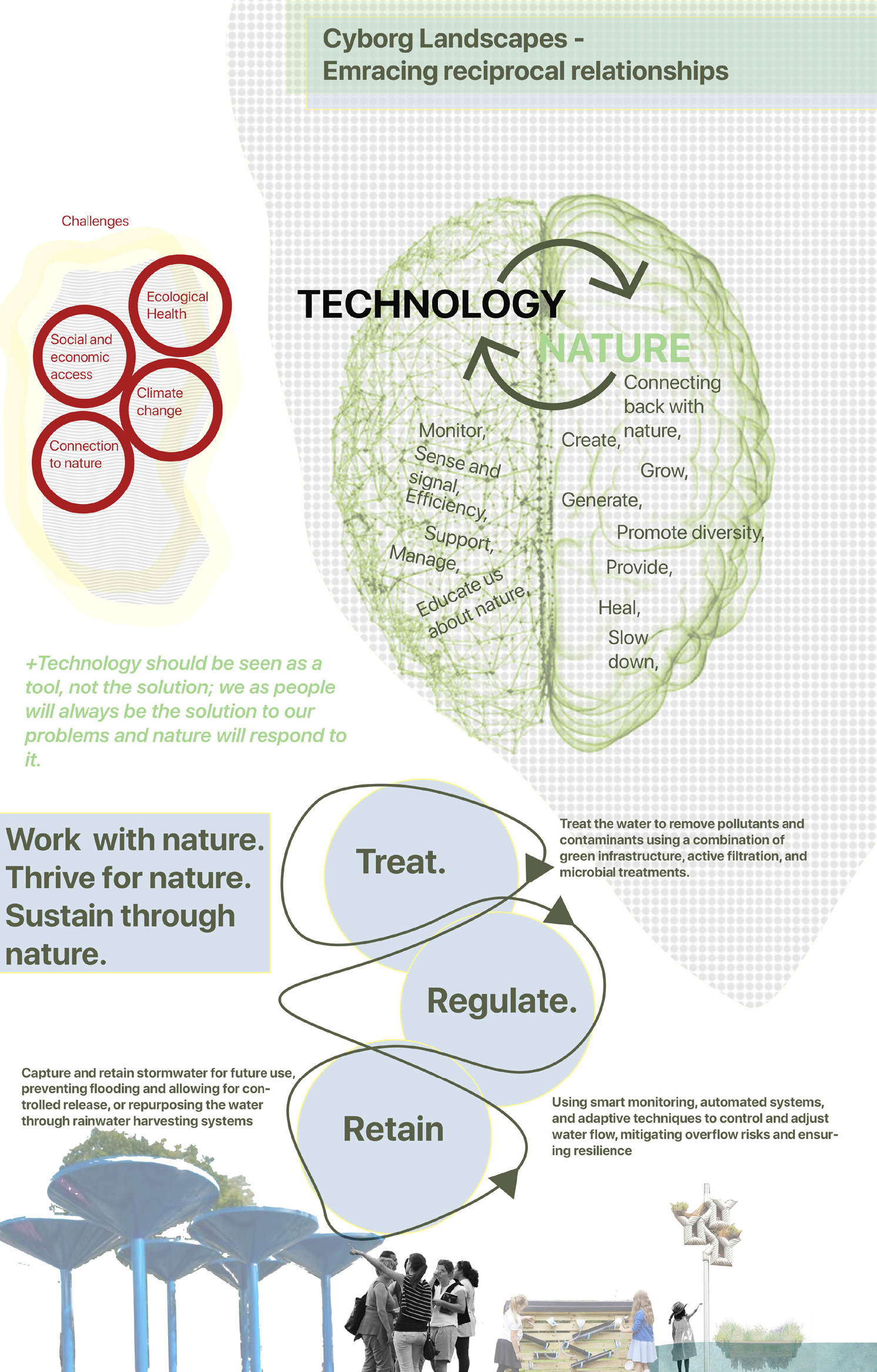
This design manifesto envisions a future where nature and technology coalesce to redefine water
systems, using cyborg landscapes as a tool for ecological health and social resilience. By integrating
natural processes with technological interventions, this proposal aims to address the pressing issue
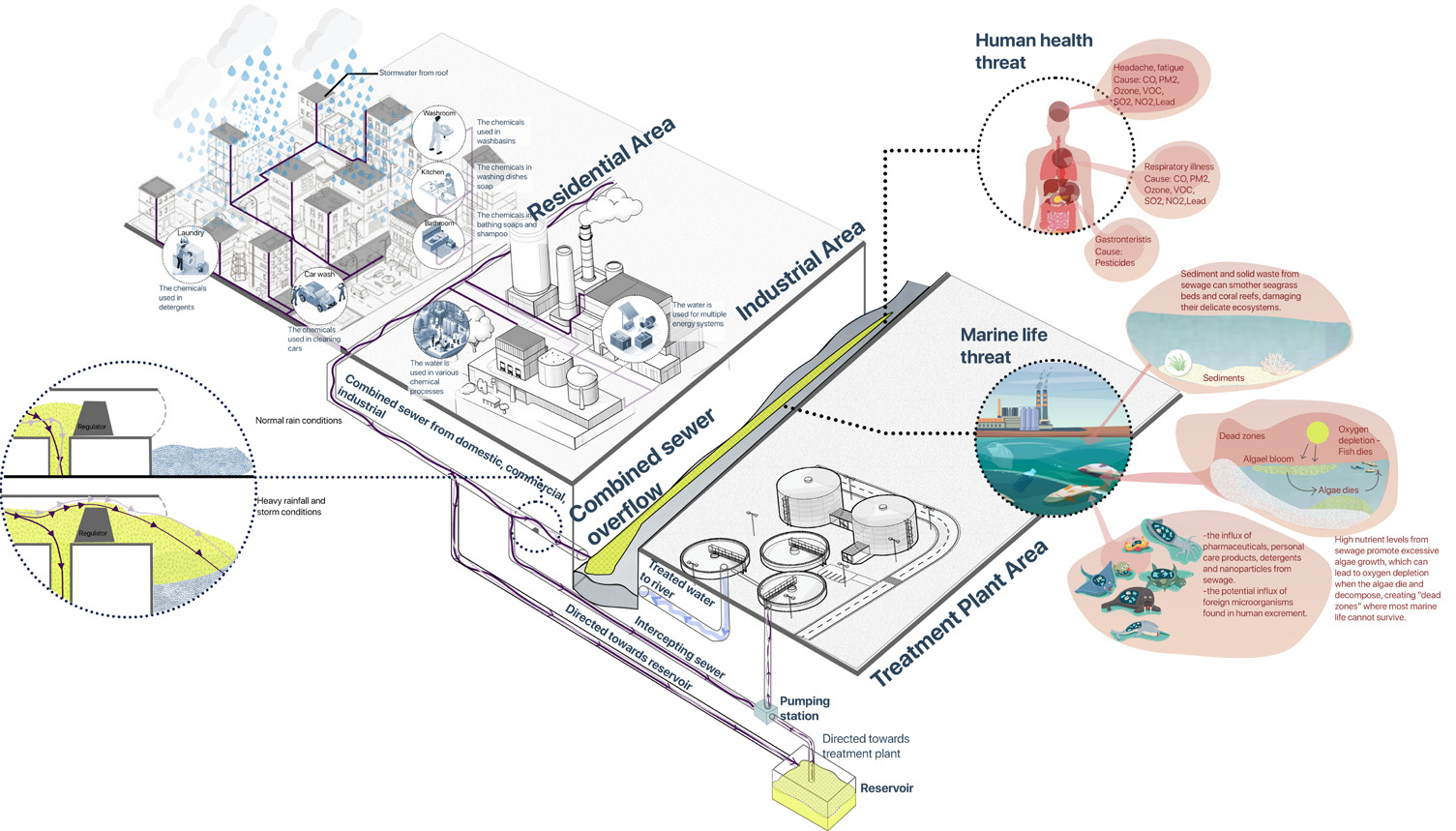
of Combined Sewer Overflows (CSOs) in Chicago’s most vulnerable communities, advocating for a
post-capitalistic approach where infrastructure serves both people and ecosystems equitably.
A Hybrid System for Water Justice
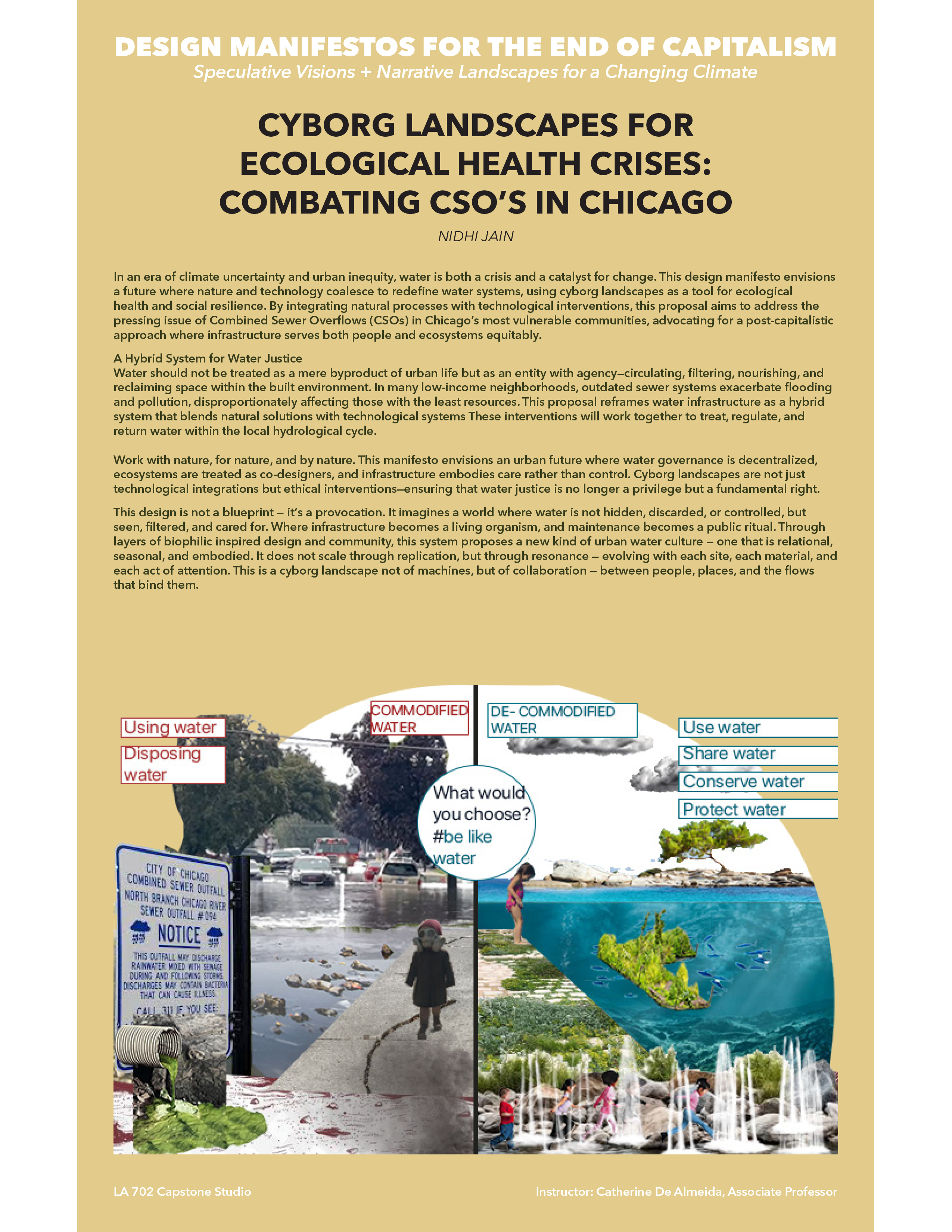
Water should not be treated as a mere byproduct of urban life but as an entity with agency—circulating,
filtering, nourishing, and reclaiming space within the built environment. In many low-income
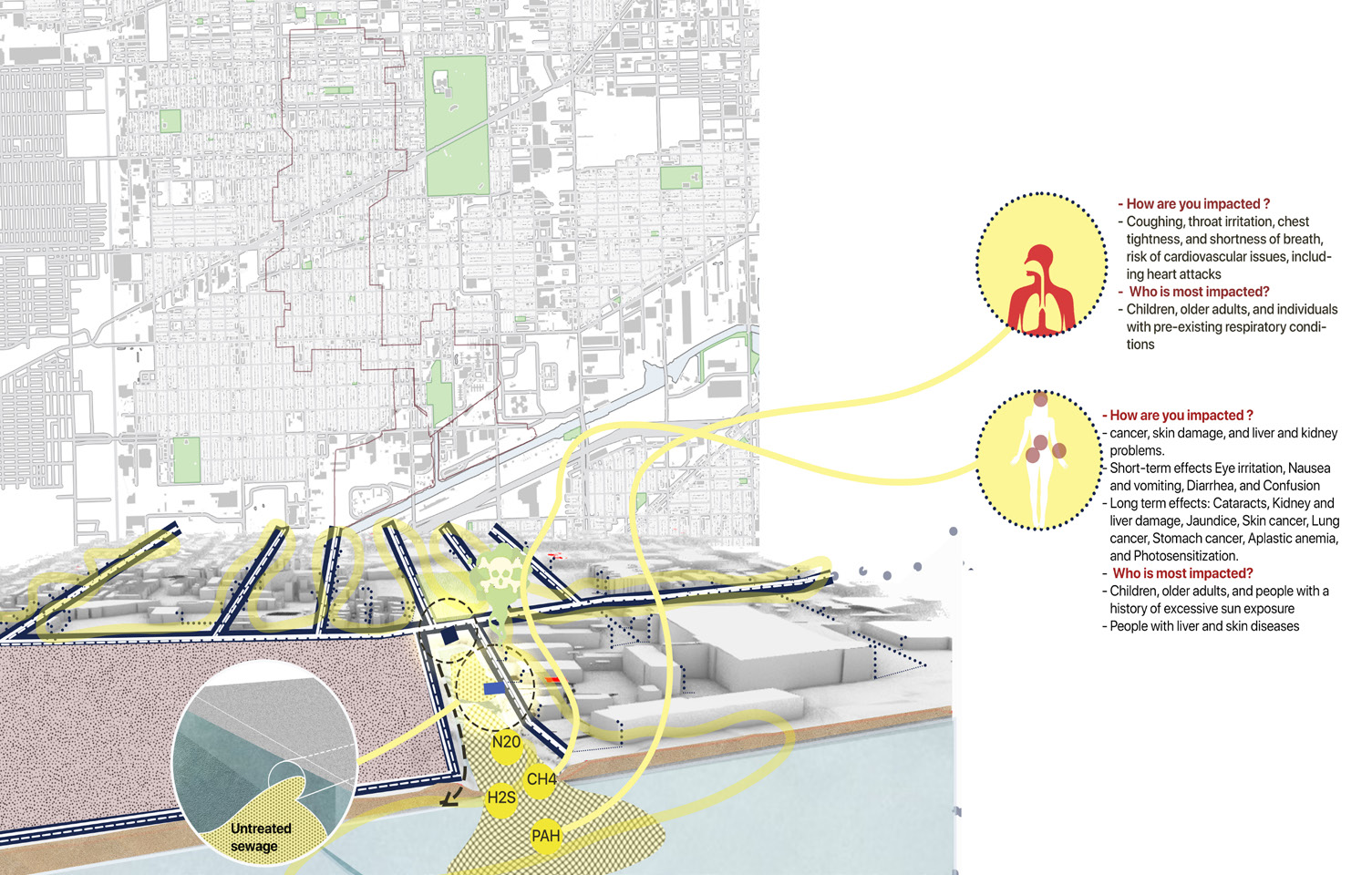
neighborhoods, outdated sewer systems exacerbate flooding and pollution, disproportionately affecting
those with the least resources. This proposal reframes water infrastructure as a hybrid system that blends
natural solutions with technological systems These interventions will work together to treat, regulate, and
return water within the local hydrological cycle.
Toward a Democratic, Post-Capitalistic Water Future
Work with nature, for nature, and by nature. This manifesto envisions an urban future where water
governance is decentralized, ecosystems are treated as co-designers, and infrastructure embodies care
rather than control. Cyborg landscapes are not just technological integrations but ethical interventions—
ensuring that water justice is no longer a privilege but a fundamental right .