Urban Living Lab
Chanel Chang
Jill Chao
Jingyao Wu
Humans inhabit the Earth in ways that are wasteful and disconnected.
Mass production and consumption
lead to excessive material waste, driven by extractive and destructive practices. Under capitalism,
resource accumulation and production efficiency are prioritized over sustainable relationships among people,
non-human species, and the land.
In Seattle, many former industrial sites become neglected gray zones, abandoned when they lose economic
value. They are quickly redeveloped for corporate or commercial use, concealing pollution and continuing the
cycle of extractive land use. This reflects a capitalist approach, where land, like materials and products, is treated as
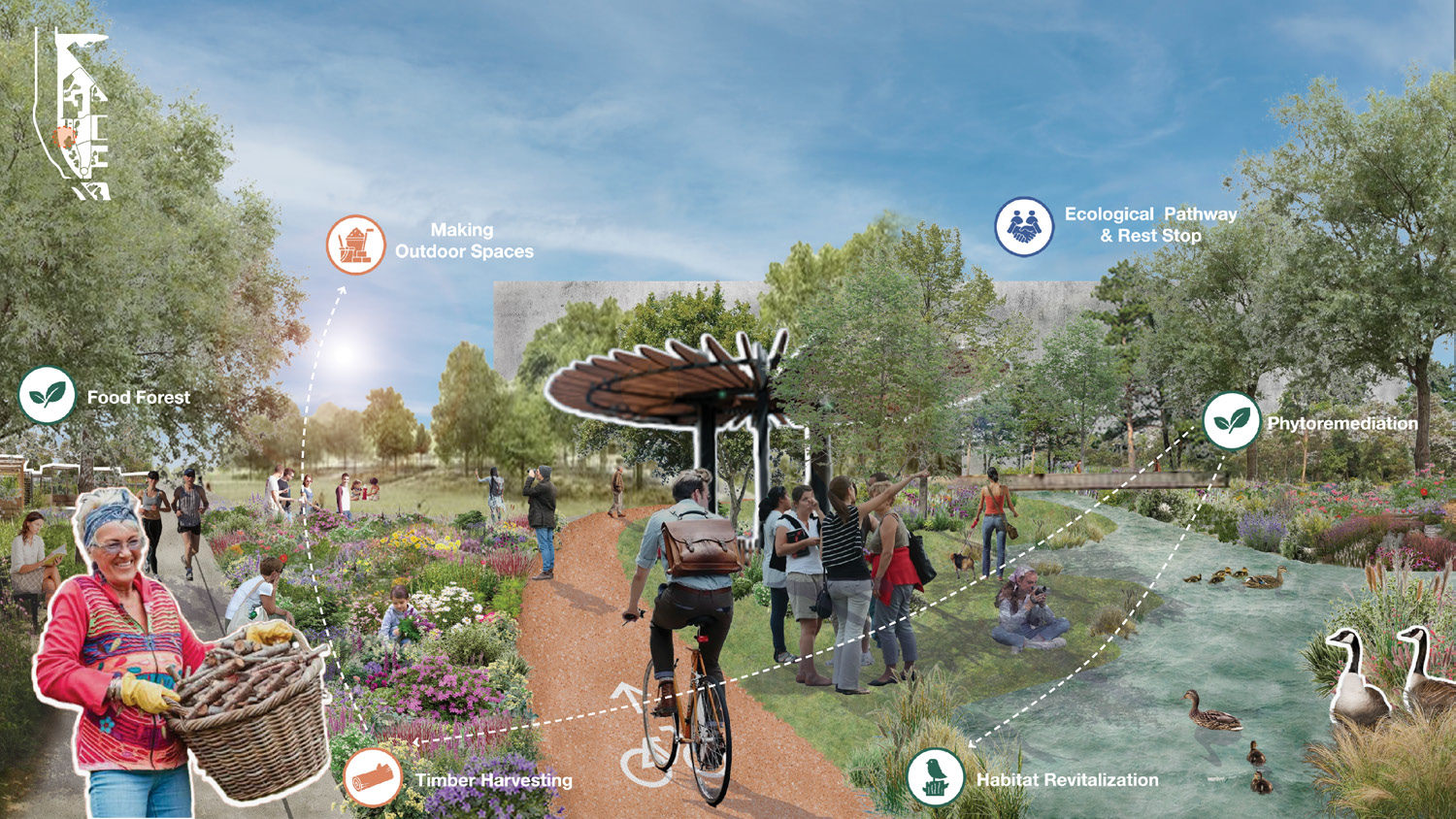
disposable. Through our design, we seek to reimagine a regenerative future for deindustrialized landscapes,
nurturing relationships between land and its inhabitants.
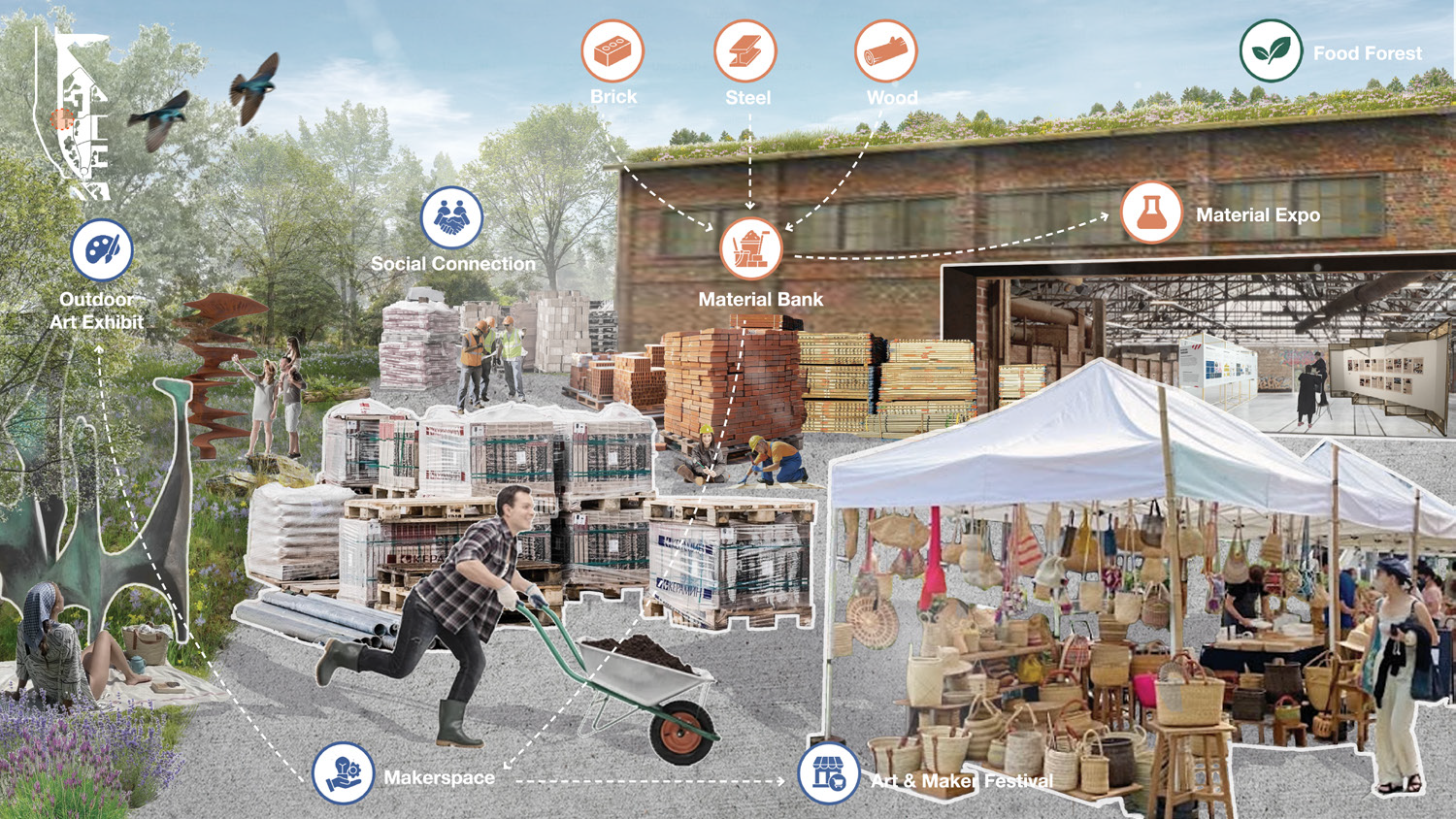
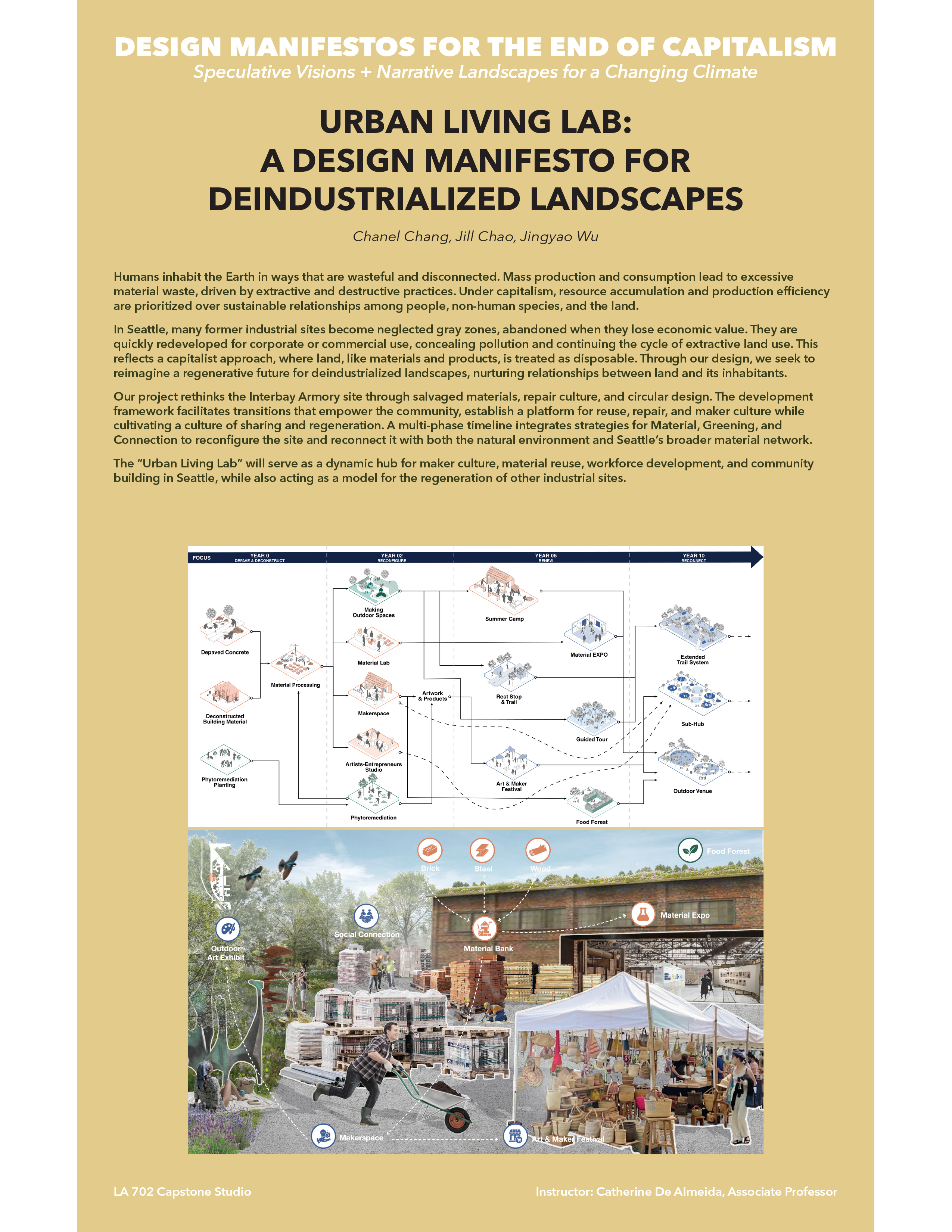
Our project rethinks the Interbay Armory site through salvaged materials, repair culture, and circular design. The
design framework facilitates transitions that empower the community, establish a platform for reuse, repair, and
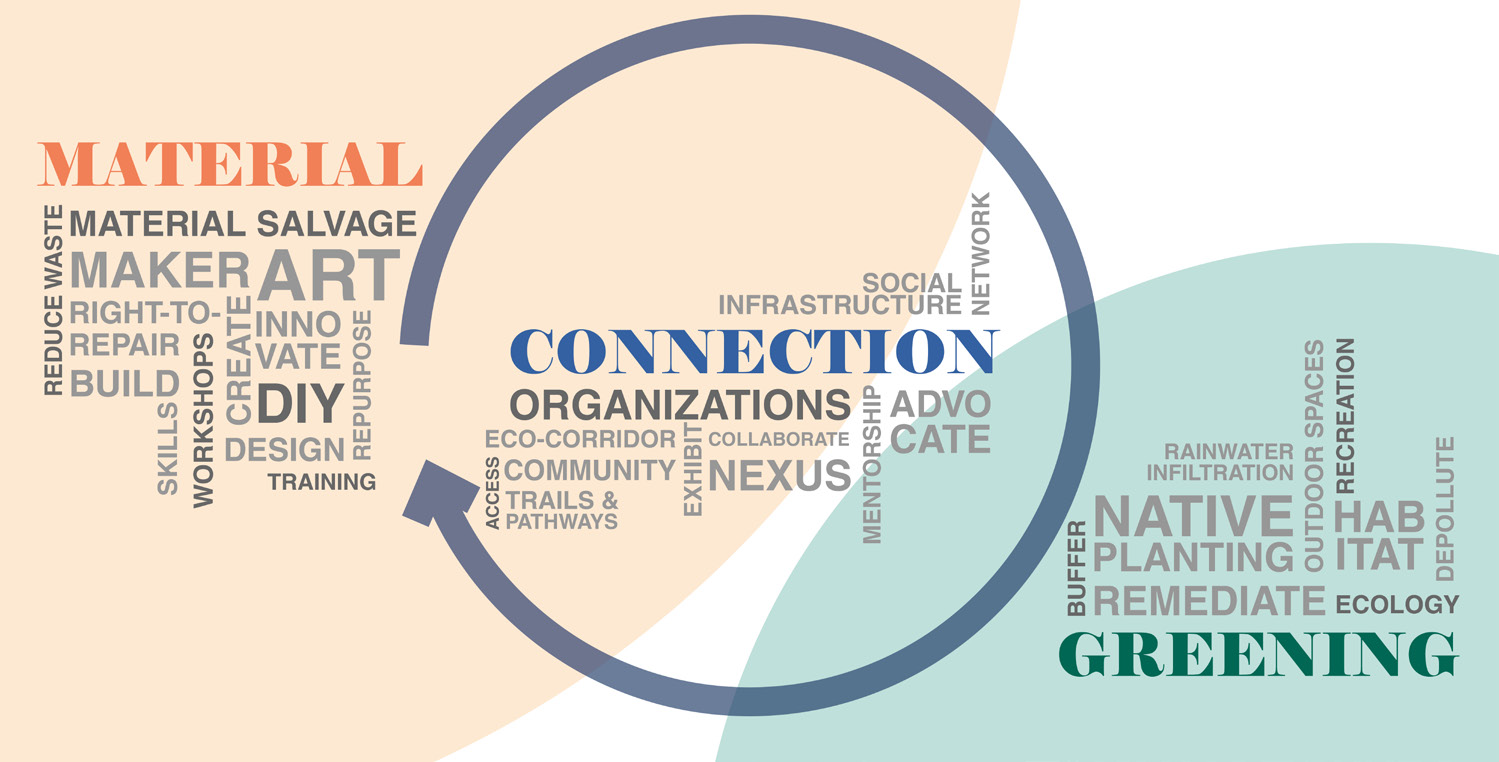
maker culture, and foster a culture of sharing and regeneration. A multi-phase timeline integrates strategies for
Material, Greening, and Connection to reconfigure the site and reconnect it with both the natural environment
and Seattle’s broader material network.
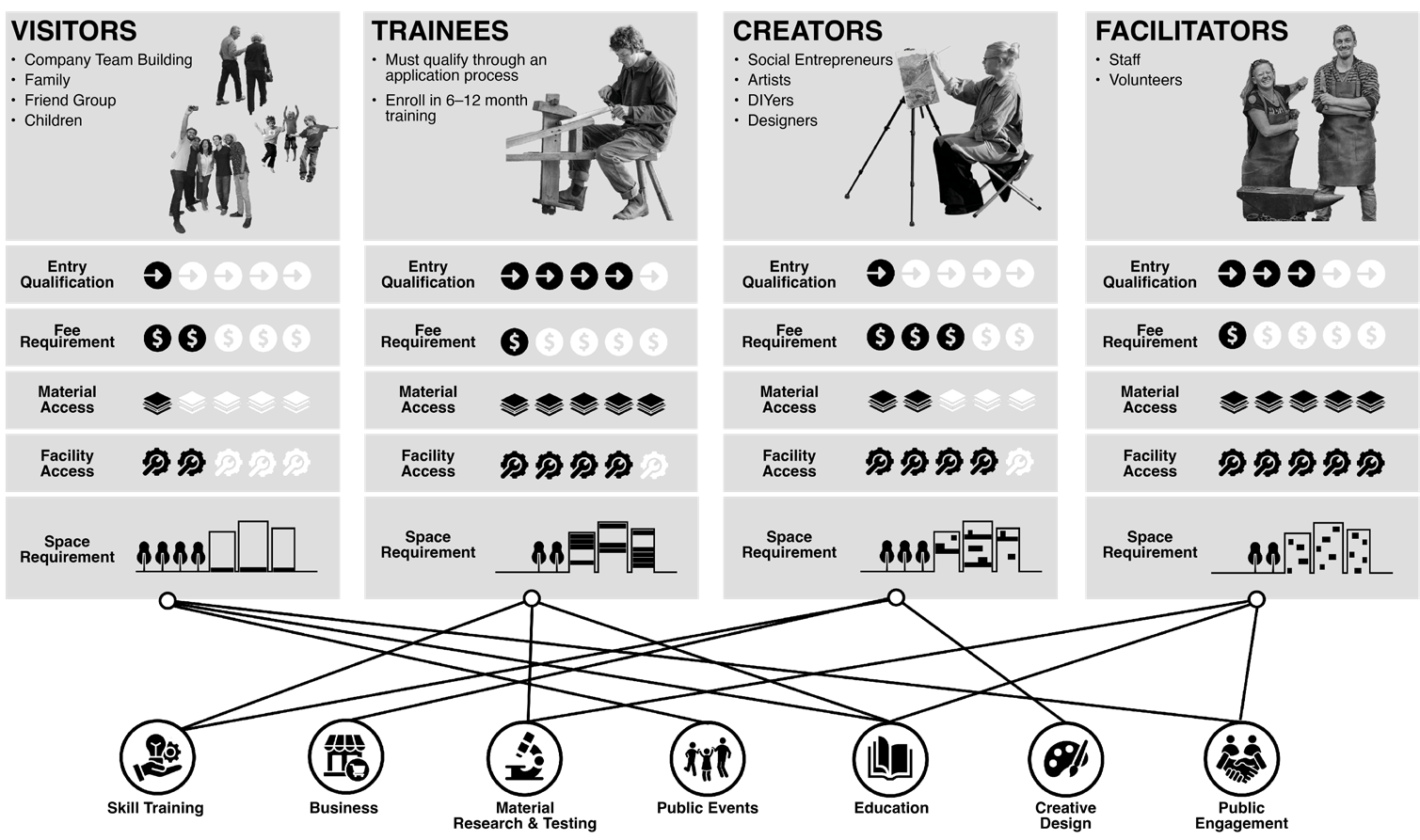
The “Urban Living Lab” will serve as a dynamic hub for maker culture, material reuse, workforce development, and
community building in Seattle, while also acting as a model for the regeneration of other industrial sites
lead to excessive material waste, driven by extractive and destructive practices. Under capitalism,
resource accumulation and production efficiency are prioritized over sustainable relationships among people,
non-human species, and the land.
In Seattle, many former industrial sites become neglected gray zones, abandoned when they lose economic
value. They are quickly redeveloped for corporate or commercial use, concealing pollution and continuing the
cycle of extractive land use. This reflects a capitalist approach, where land, like materials and products, is treated as
disposable. Through our design, we seek to reimagine a regenerative future for deindustrialized landscapes,
nurturing relationships between land and its inhabitants.
Our project rethinks the Interbay Armory site through salvaged materials, repair culture, and circular design. The
design framework facilitates transitions that empower the community, establish a platform for reuse, repair, and
maker culture, and foster a culture of sharing and regeneration. A multi-phase timeline integrates strategies for
Material, Greening, and Connection to reconfigure the site and reconnect it with both the natural environment
and Seattle’s broader material network.
The “Urban Living Lab” will serve as a dynamic hub for maker culture, material reuse, workforce development, and
community building in Seattle, while also acting as a model for the regeneration of other industrial sites