Designing-With Relational Landscapes:
A Design Manifesto For
Generative
Human-Plant Entanglements
Matthew Jernigan
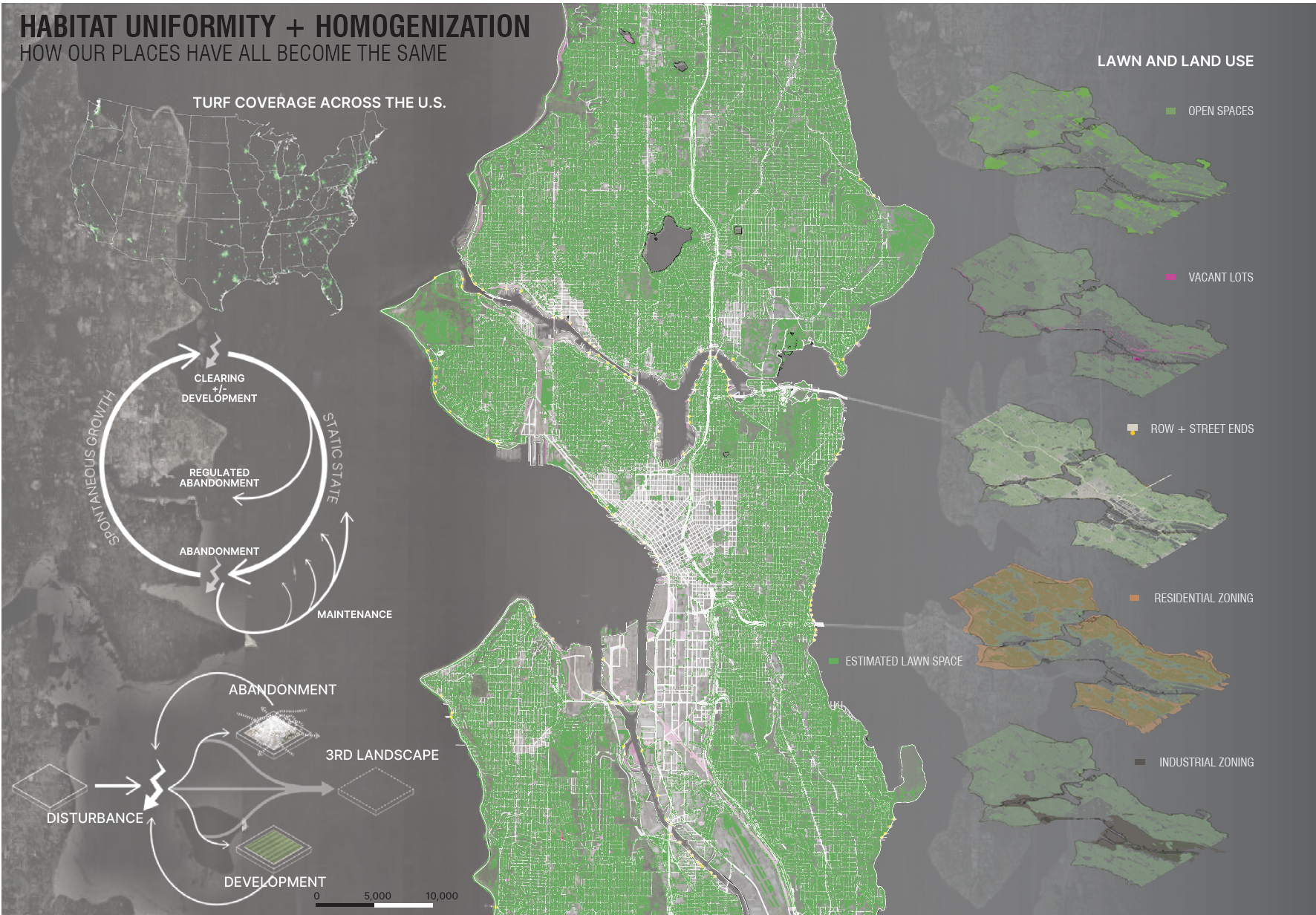
Modern development and design have shaped environments that are functionally and aesthetically
similar across almost all regions and spaces. An obsession with control and a self-centered belief in
human superiority has led to the proliferation of flattened and static landscapes—from parking lots to
the ubiquitous sprawling lawn. The drive for standardization and homogenization has extinguished the
multiplicity of experiences, reducing the rich web of relationships that both humans and
more-than-humans rely on to flourish. When everything becomes the same, we lose our capacity to
imagine things can be different. We lose sight that another world is possible.
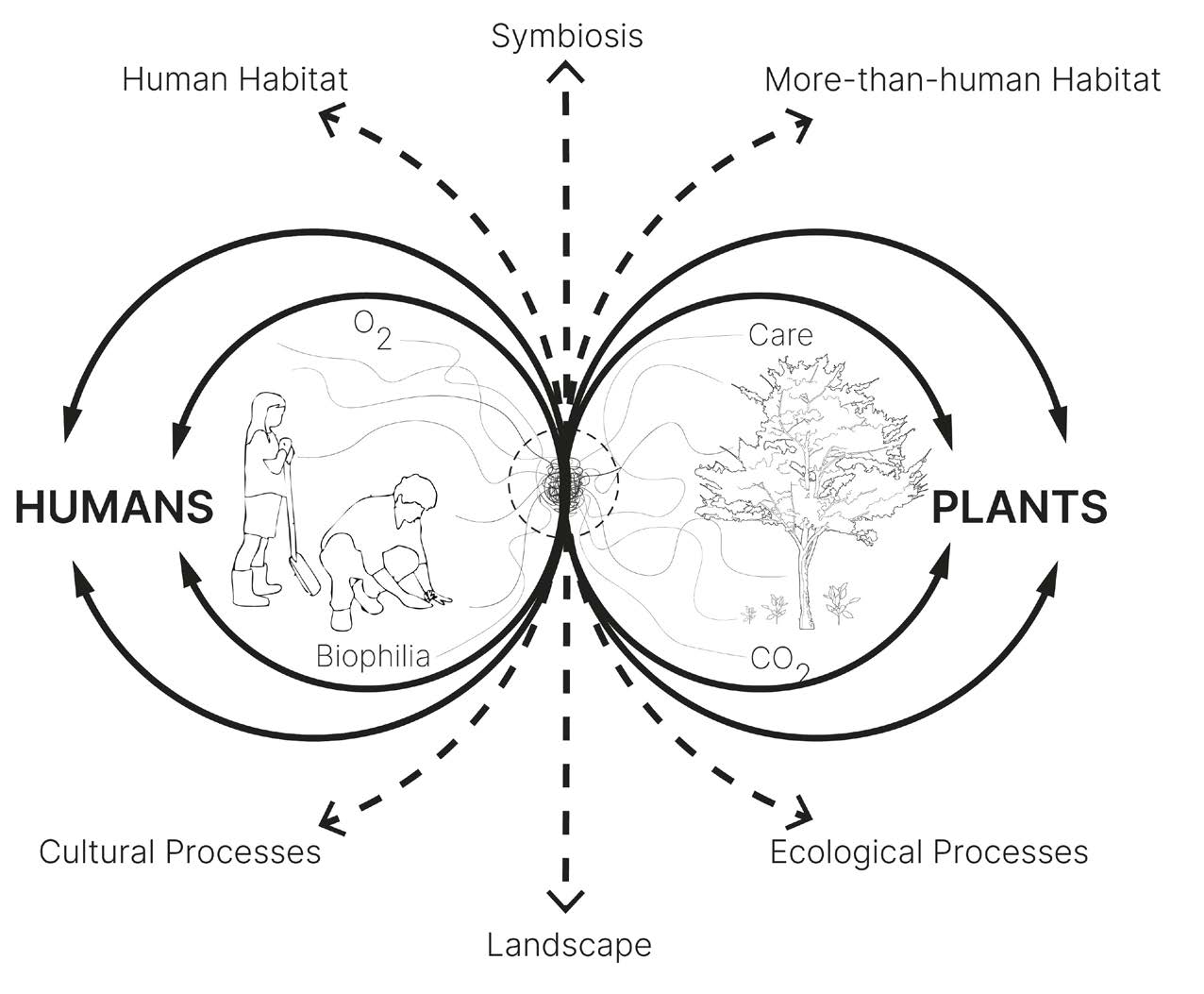
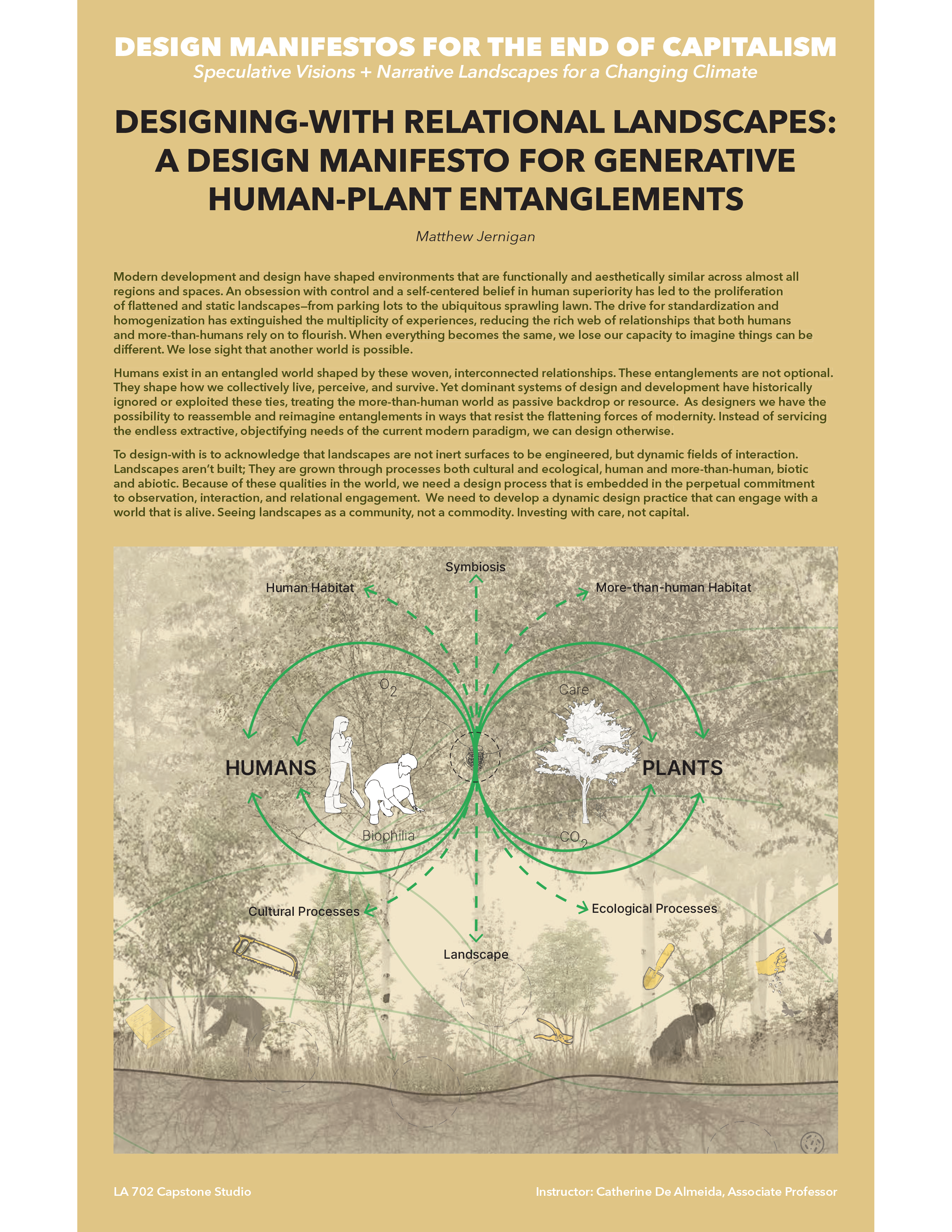
Humans exist in an entangled world shaped by these woven, interconnected relationships. These
entanglements are not optional. They shape how we collectively live, perceive, and survive. Yet
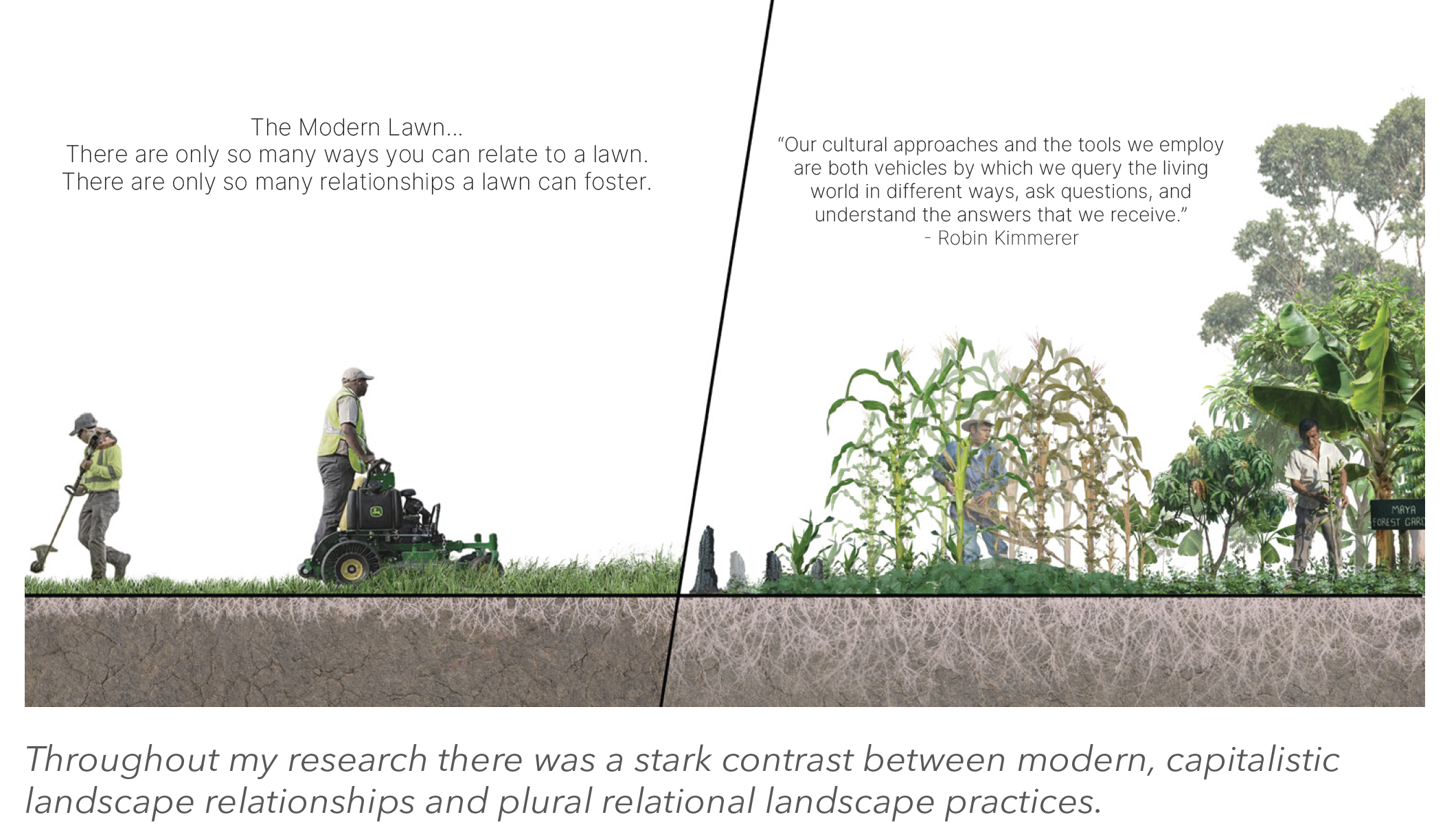
dominant systems of design and development have historically ignored or exploited these ties, treating
the more-than-human world as passive backdrop or resource. As designers we have the possibility
to reassemble and reimagine entanglements in ways that resist the flattening forces of modernity.
Instead of servicing the endless extractive, objectifying needs of the current modern paradigm, we can
design otherwise.
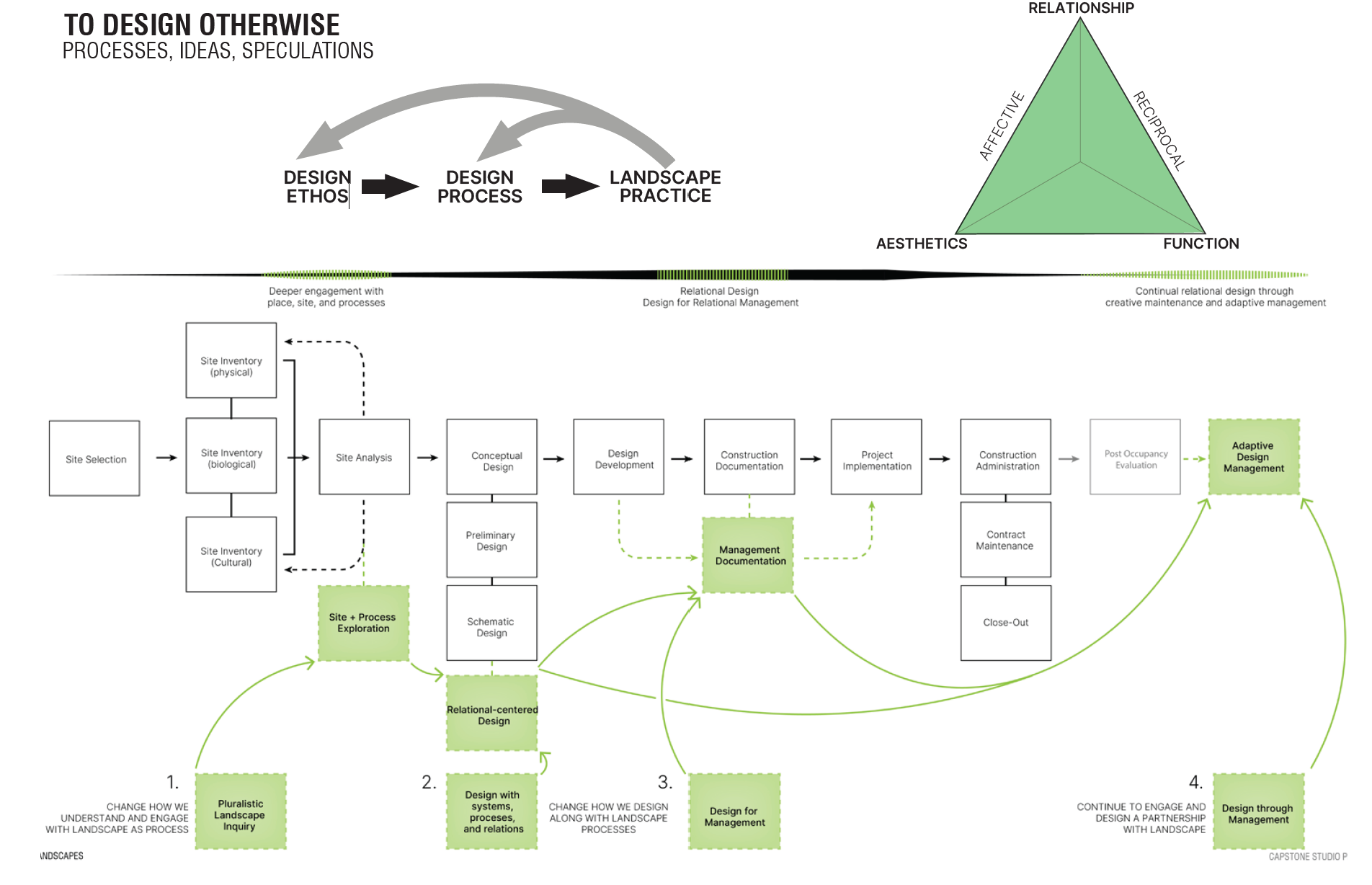
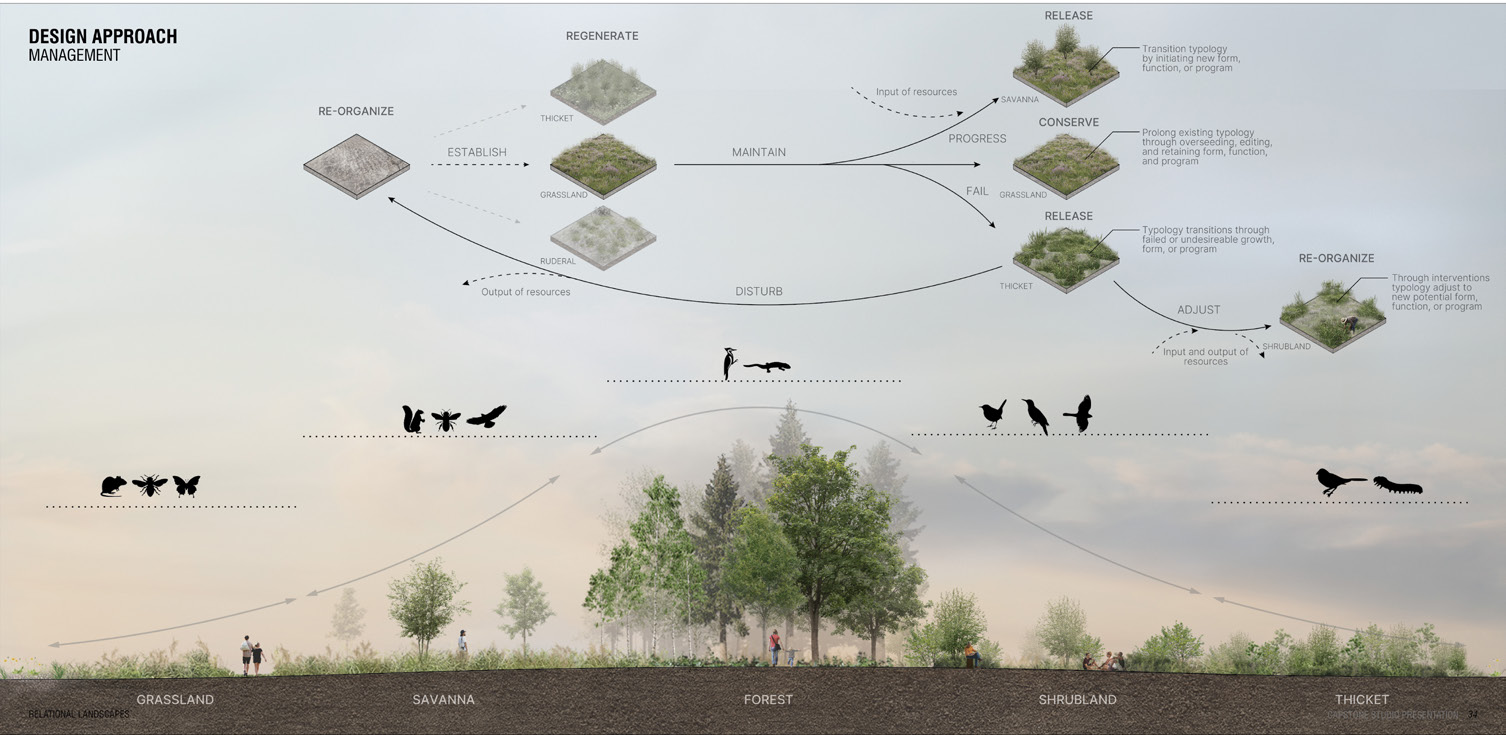
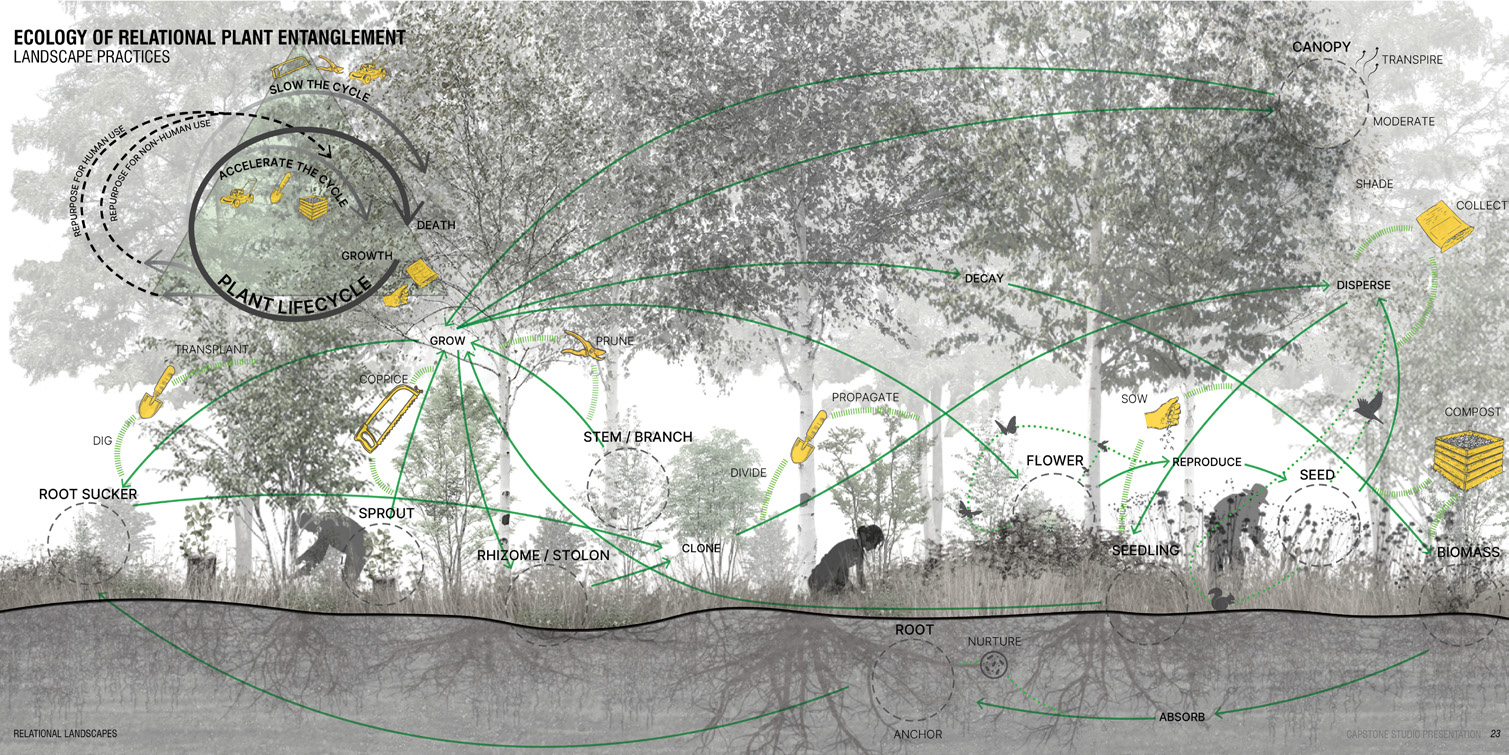
To design-with is to acknowledge that landscapes are not inert surfaces to be engineered, but dynamic
fields of interaction. Landscapes aren’t built; They are grown through processes both cultural and
ecological, human and more-than-human, biotic and abiotic. Because of these qualities in the world,
we need a design process that is embedded in the perpetual commitment to observation, interaction,
and relational engagement. We need to develop a dynamic design practice that can engage with a
world that is alive. Seeing landscapes as a community, not a commodity. Investing with care, not capital.