Cracking The Coconut: A Design Manifesto For Systemic Approaches to Coconut Farming in Indonesia
Ellee Ruder
Capitalism demands a declaration of space and a disregard of ecological origins. Capitalistic
structures camouflage a material’s source and the systematic efforts of creating it. Consumers are
coerced into the notion of individuality and ownership of the land. Consumers are encouraged to
think of spaces as possessing singular use and permanence.
Capitalism demands the systematic exploitation and suffocation of smaller entities in benefit of
larger ones. Capitalism is exploitative on all levels of the supply chain, encouraging the over-extraction
of precious resources in favor of the continuous growth of profit margins.
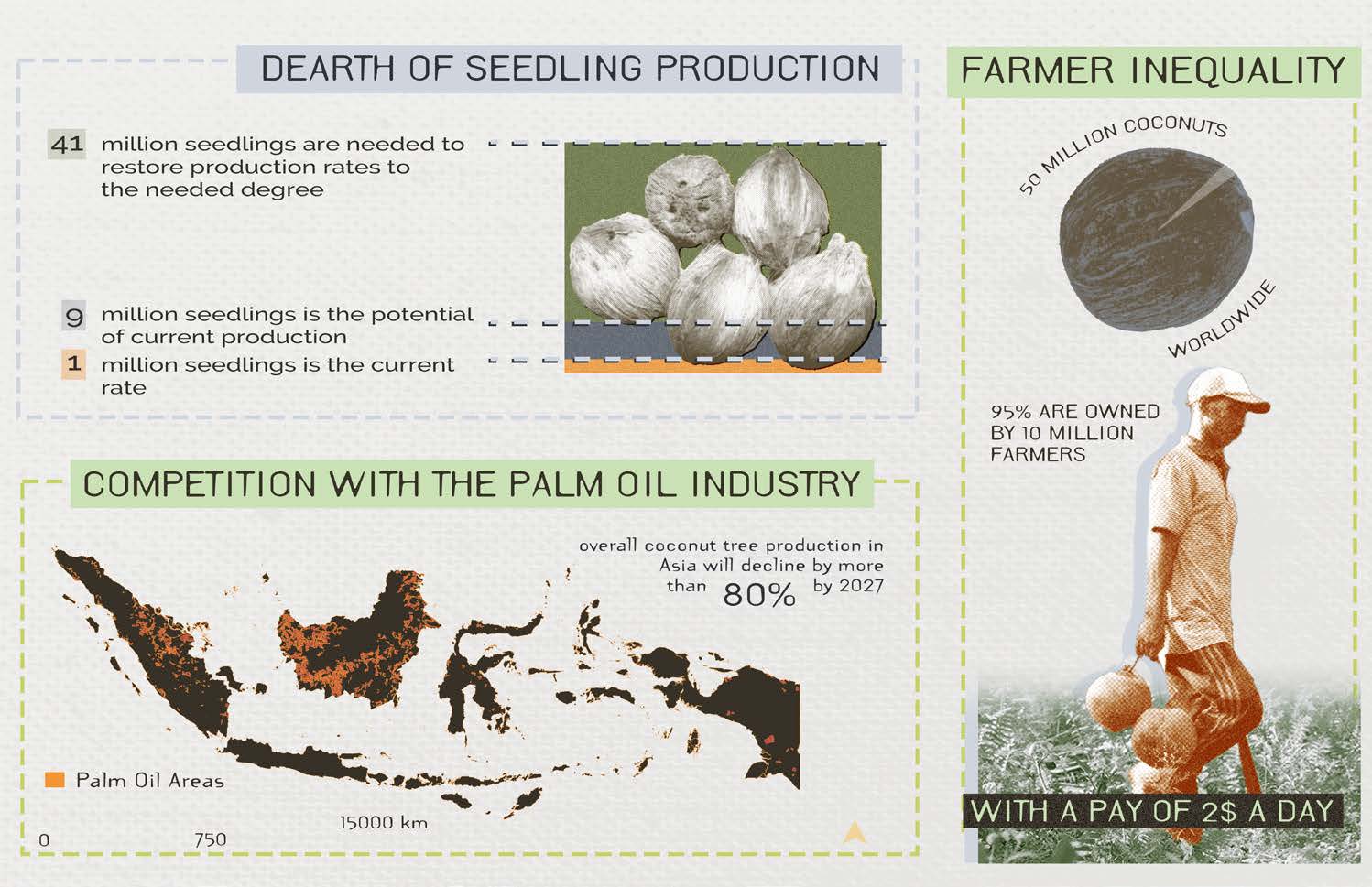
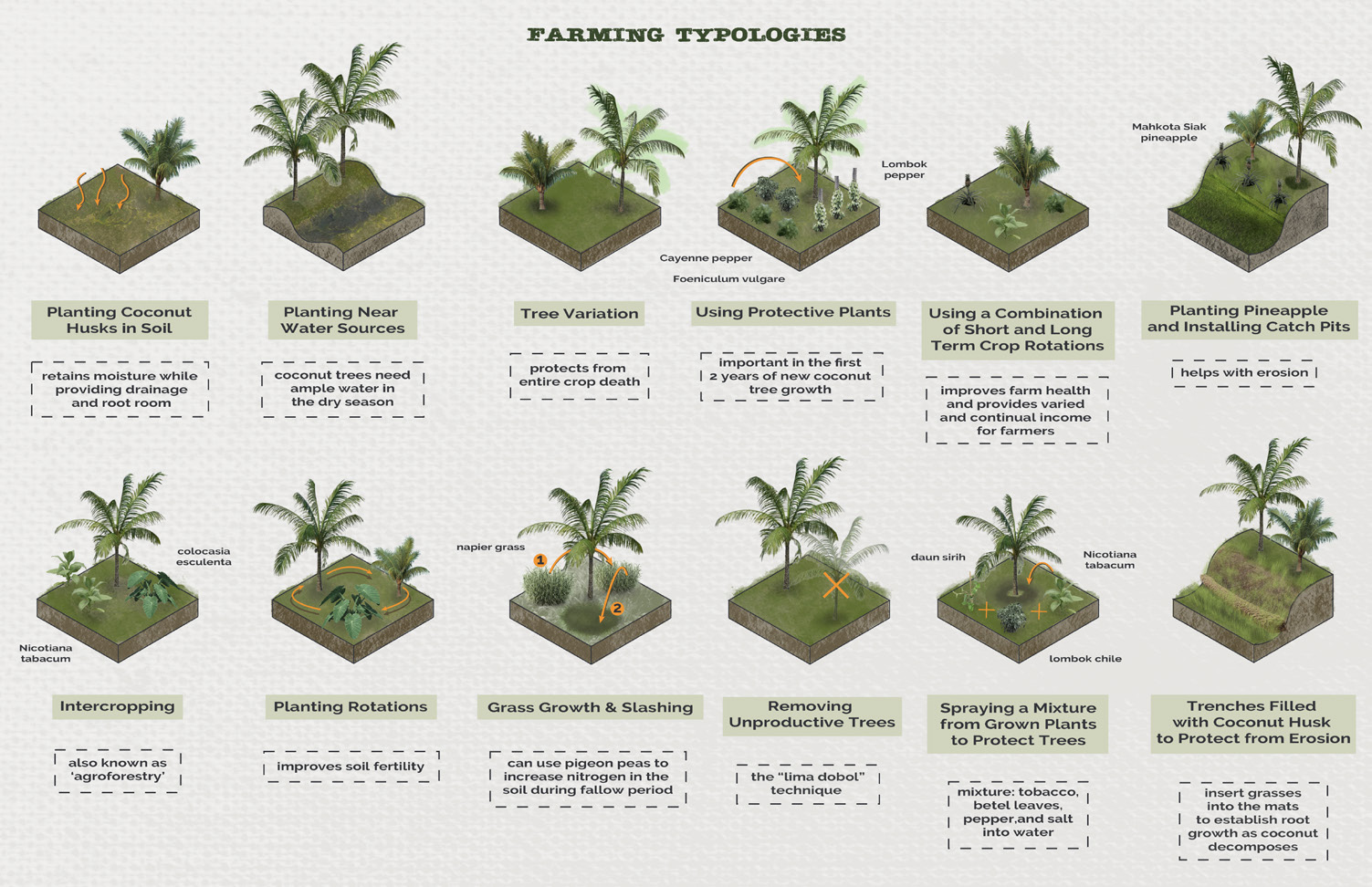
Coconut farming is no stranger to this system. Indonesia, the top exporter of coconut, is tattooed with
the plight of capitalistic demands. The current system of production and processing of the fruit is
hingent on a dearth of support for small farms and a homogenization of farming techniques. The current
means of production not only extracts resources, but power from the farmers who generate the material.
This power is usurped by larger entities that monopolize the processing of such a resource in a manner
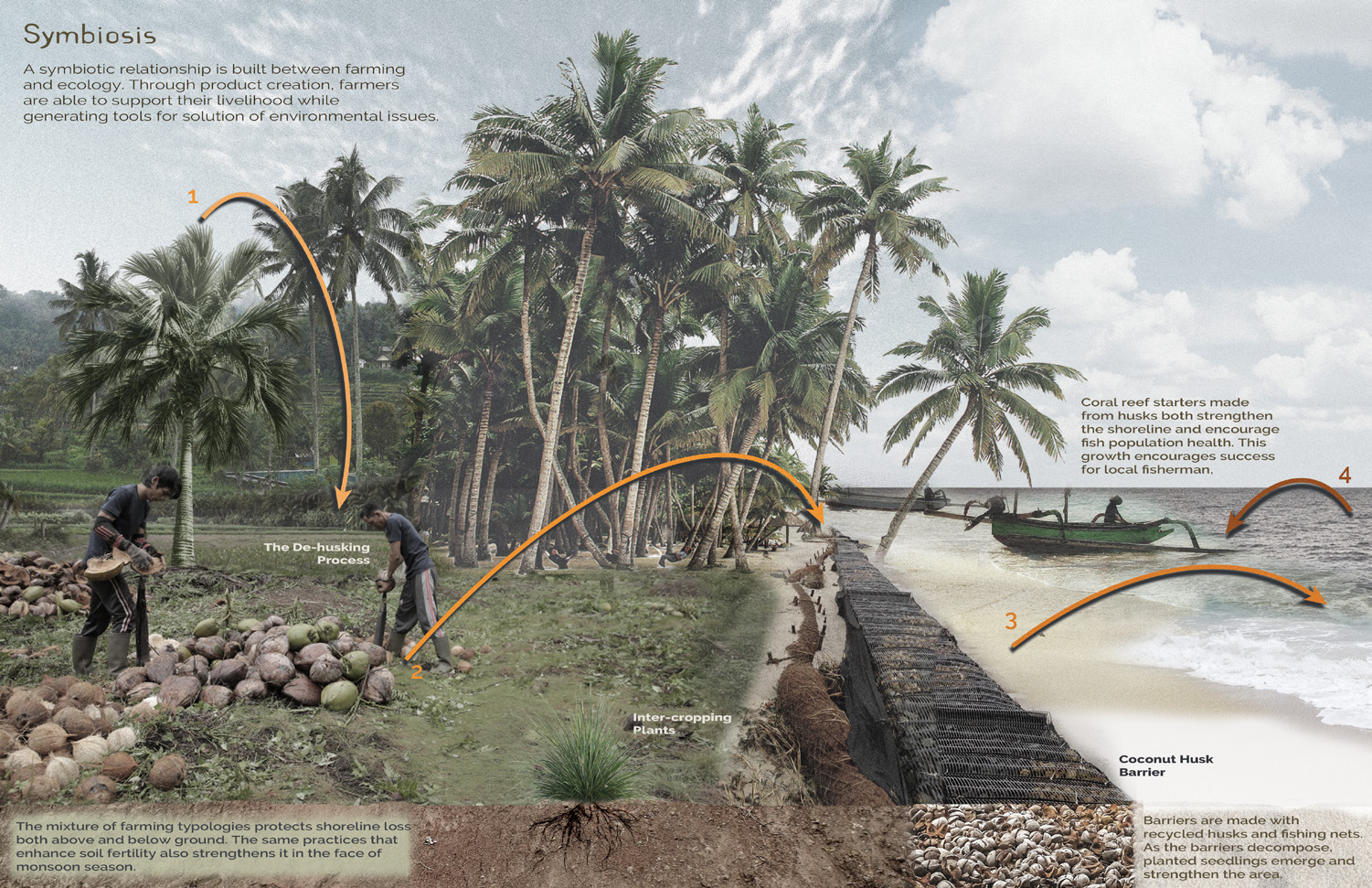
that creates unnecessary waste. This waste, at the expense of both farmers and the environment,
perpetuates the issues at the source. This extraction, in the benefit of consumption, perpetuates the
separation of the effects of capitalistic ways of creating from the final product.
This structure must change. Power must be restored to both more-than-human participants and farmers,
rather than manufacturers. The environment must be considered as an equal and worthy entity in the
planning and implementation of farming practices. Non-linear and indigenous ways of thinking must become
the forefront of farming practices in Indonesia. Interests in capitalistic and monopolistic ways of thinking
must be depleted in favor of communal and uplifting ways of doing.