Biodigester Community
Workshop #2
Biodigester Community
Workshop #2
WHEN
February 13, 2025
WHERE
Food Lifeline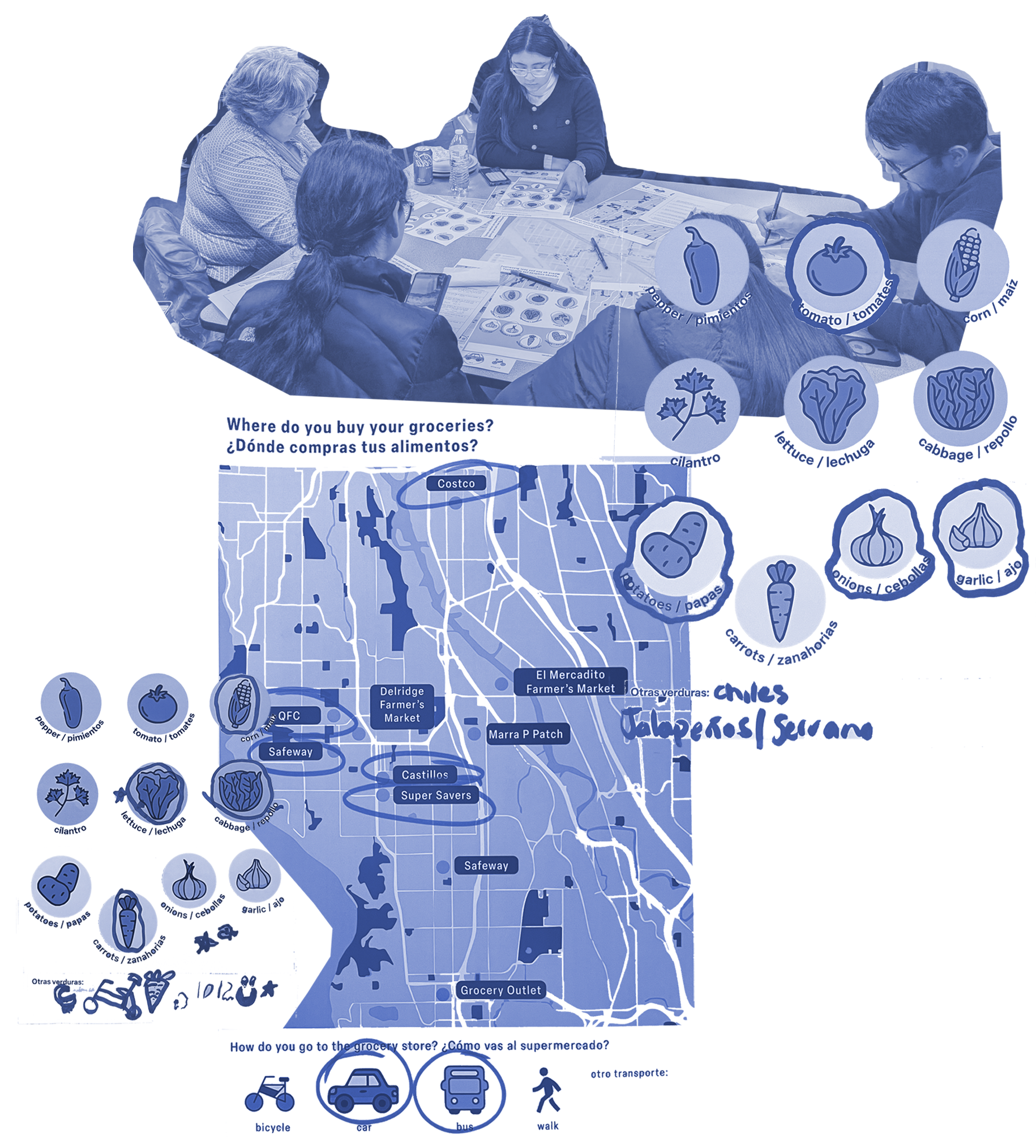


Workshop Summary:
This second workshop built upon feedback from the first workshop, narrowing in on the top two
benefits of highest priority for the community: the first being local food systems, and the second,
local transportation. The workshop started again with introductions at each table and an overview
of important definitions and case studies. The JC3 team then shared a summary of the results
from the last workshop and a new diagram, which visualized how the biodigester can serve
both local food systems and local transportation and be combined with existing and new
infrastructure.
Who Attended:
Duwamish Valley Sustainability Association, South Park Community Members,
JC3 Members: Sarah Chu and Catherine De Almeida, and local landscape architects
Workshop Prompts:
How would you like to see local transportation improve?
How far do you travel to shop for groceries?
How much do you spend on groceries?
What are your preferred types of produce?
What do you currently do with your household food waste?
Activity 1:
The first activity consisted of placing large-format maps of South Park at each table of 6 people, with
an optional layer of trace, and asking participants to mark ideas for new routes and stops . Some
participants included additional ideas for improved sidewalks and street lighting. At the end, a
member of each group came up and shared a summary and additional ideas from the exercise. Many
routes included additional stops which were adjacent to community resources such as a medical clinic,
food bank, and park.

Activity 2:
The second activity of this workshop consisted of a few short individual activities – a map of local
grocery stores, a questionnaire, and a graphic collecting data on preferred types of produce to be grown
and eaten. At the end, volunteers came up and shared their responses and impressions so far of the
engagement workshops, and overall feelings towards the possibility of a large-scale biodigester. This
was helpful in learning more about how well the project had been communicated so far, and how
invested the community was in the feasibility of its implementation.

Outcomes and Next Steps:
From this workshop, we learned that more accessible transportation and access to food were high
community priorities. The most practical and insightful data collected included proposed new bus stops
drawn by community members on the existing maps, and their preferences for how a local shuttle and
transportation routes could be planned so that they support increased mobility in the neighborhood.
Existing bus lines cut through the middle and hug the outside of the neighborhood, run infrequently, and
don’t include accessible stops to important sites such as a medical clinic, grocery store, and park. We
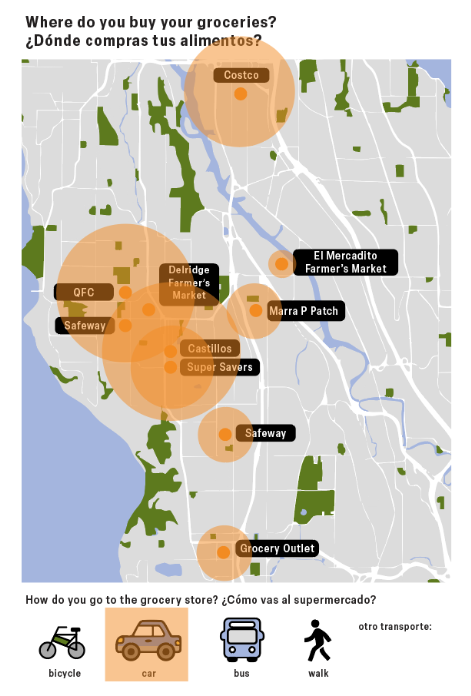
also found that many participants traveled at least three miles outside of the neighborhood for a majority
of their grocery shopping. The least used mode of transportation to get groceries were bus and bike, with
car being the most common. For produce preferences, most participants chose almost all options
presented, with the conclusion that in general, access to fresh produce is of top priority, as well as
affordability. Many participants brought up the unaffordability of organic groceries, and emphasized the
importance of the biodigester in lowering the prices and increasing the availability of fresh, organic produce.
Going forward, through digital mapping, the JC3 team layered the community's drawn routes, shuttle
stops, and local street improvements to create three options that were presented at the next meeting. The
purpose of the following workshop was to receive specific feedback on existing detailed data and obtain
more specificity on precise locations of community-determined amenities and transportation routes, which
were then further developed into a final plan.